Three Habits for Happy Roses
If your roses are your pride and joy, this one is for you. Roses get a reputation for being fussy, but the truth is they just want a few simple things done consistently. Today I am sharing how I keep mine looking gorgeous all season, plus exactly how I handle the two troublemakers I get asked about most: black spot and Japanese beetles. Let's dig in, y'all.

Three habits for happy roses
Before we talk problems, let's talk prevention, because healthy roses fight off most trouble on their own.
Stay ahead of disease. The second you spot a leaf that looks off, pluck it and toss it, and clean up any fallen leaves around the base so nothing lingers to reinfect.
Water from the ground, never overhead. Wet leaves invite fungus to spread. Water right at the soil line and keep that foliage as dry as you can.
Give them sun and airflow. Roses crave full, intense sun and need room to breathe. Good air circulation keeps moisture from settling in.
ROSE GARDENING TIPS:
Water first thing in the morning so any splash dries fast in the sun. When you prune, cut at a 45 degree angle just above an outward facing bud. That opens up the center of the plant for more airflow.
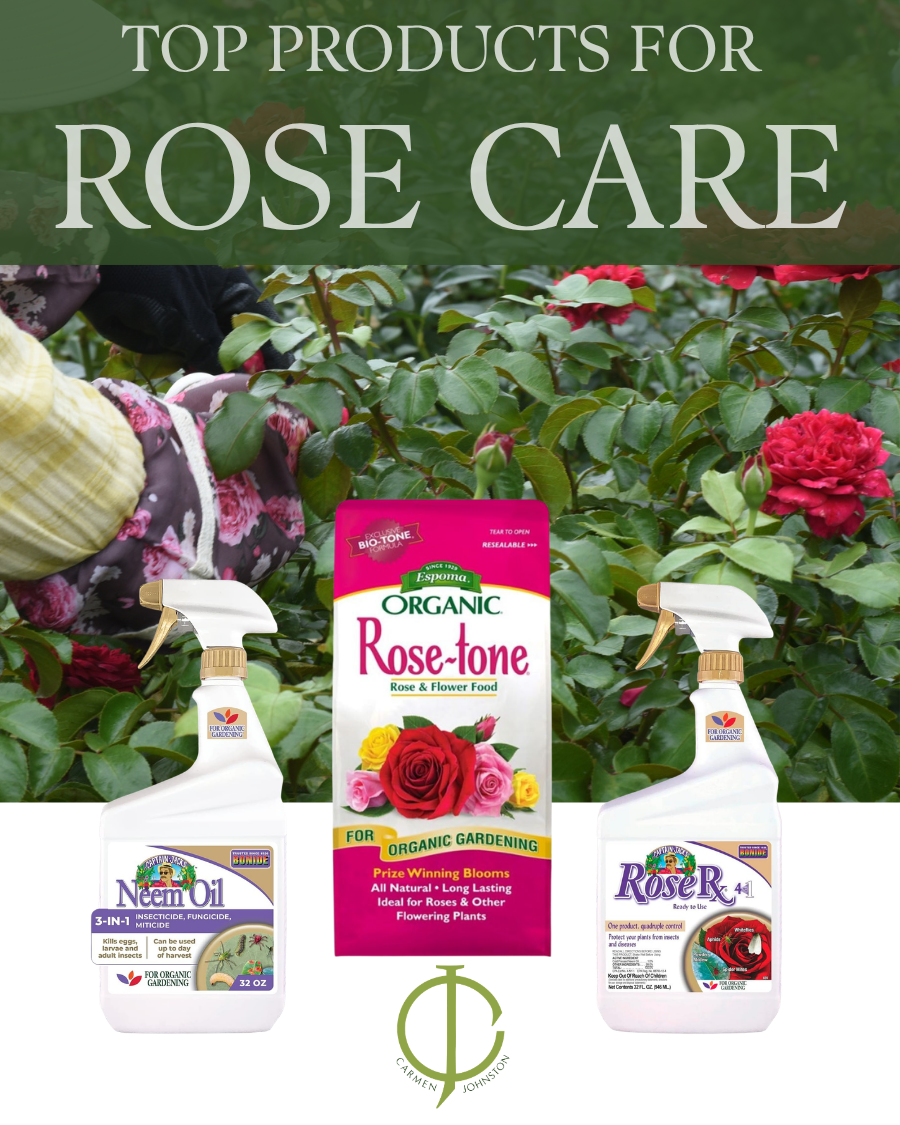
top products every gardener needs for healthy roses
T R O U B L E N O . 1
how to treat black spot on roses
Black spot is the most common rose disease, especially in our humid Southern summers. You will see dark spots ringed with yellow, and leaves dropping. The good news is you can beat it the natural way if you stay consistent.
Neem oil is your cornerstone. I like Captain Jacks neem oil. It handles black spot, powdery mildew, and rust, plus pests, all in one. Spray every seven days, early morning or evening to protect the bees.
Potassium bicarbonate is your spot treatment for leaves that are already showing disease.
Use a sulfur fungicide works as a backup, but skip it once temperatures top 90 degrees here in the heat.
In a pinch, one tablespoon of baking soda in a gallon of water with a little horticultural oil to help it cling can slow the spread.
T H E R E A L S E C R E T
Prevention beats cure every time. Clean up fallen leaves and refresh your mulch each season to break the disease cycle, and start spraying before you ever see a spot, not after.
T R O U B L E N O . 2
How to HandlE Japanese beetles
These shiny little pests can skeletonize a rose leaf fast. Here is how I keep them in check without harsh chemicals.
Hand-pick them early in the morning when they are sluggish, and knock them right into a bucket of soapy water. Old-fashioned and time consuming, but it truly works.
Neem oil pulls double duty here too, making the leaves taste bad so they stop feeding.
Insecticidal soap or a pyrethrin spray will knock back heavier swarms.
Treat the grubs with milky spore or beneficial nematodes worked into your lawn, so fewer beetles emerge next year.
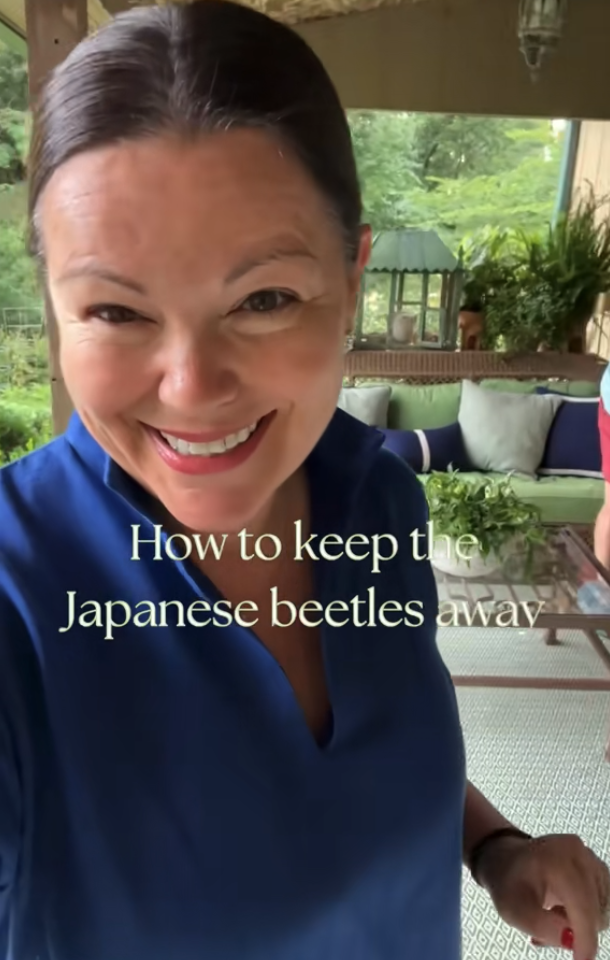
JAPANESE BEETLE DOS AND DON’TS
S K I P T H I S!
Steer clear of those Japanese beetle bag traps. The lure actually draws more beetles into your yard than it catches, so you end up worse off than when you started.
D O T H I S I N S T E A D!
Use a Dynatrap.
Watch this video to see how many Japanese Beetles my Dynatrap caught!
We love our Dynatrap and have them all around our farm.
What products do I reach for rose care?
For feeding, Jack's Classic Blossom Booster keeps those blooms coming once roses are budding
Espoma Rose-tone is a lovely organic feed made just for roses
Kellogg Organics Garden Soil builds your healthy soil base.
For protection, Captain Jacks neem oil and a potassium bicarbonate product cover most of what your roses will throw at you.
Keep your hands in the dirt and your roses in the sun, friend. They will reward you for it.

Shop my Amazon Favorites!
Shop my Amazon storefront for chic + practical finds to pretty up your home inside and out! Every pick is personally bought and tested by me—no false advertising, just fabulous finds you can trust!