How to Cut Back Annuals for Better Blooms
By mid-summer, your containers and beds can start looking tired, leggy, and washed out. Y'all, this is normal. This is not the time to give up on your plants. This is the time to give them a haircut, feed them, and watch them come back bigger and better than ever. Go big or go home, right?

Don't Give Up On Your Annuals: The Mid-Summer Cut-Back Guide
Learn how to give your plants a haircut to encourage new growth!
When to Cut Back Annuals for Summer
The magic window for cutting is about 6 to 8 weeks after planting, which for most of us in the South lands right around late June through mid-July. If your plants are leggy, stretched out, flopping over the edge of the pot, or blooming only at the tips, it's time.
You can do a second light cut-back about 6 weeks after the first one if things get tired again in late August.
How much to Cut Back Annuals for fuller blooms
The general rule: cut back by one-third to one-half of the plant. I know it feels scary. Do it anyway. Cutting back stops the plant from pushing all its energy into long, stretched-out stems and redirects that energy into fresh, full, branching growth and a whole new flush of blooms.
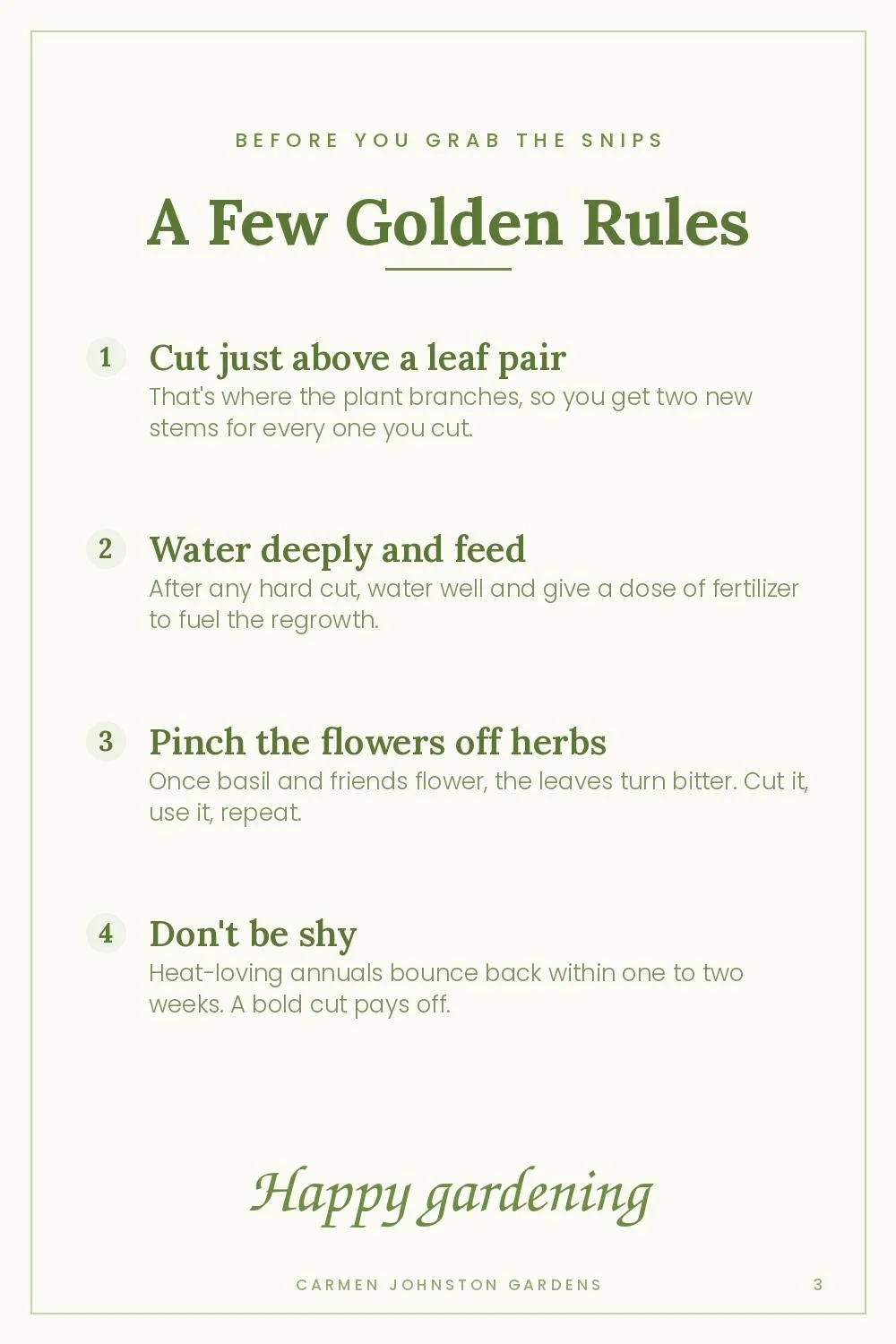
Always cut just above a leaf or a node (that little bump on the stem where leaves grow). That's where the new growth comes from.
Plant-by-Plant Cutting Cheat Sheet
These are the plants that love a good mid-summer trim to flush out for another round of color. They will look rough for about a week, then explode with new blooms.
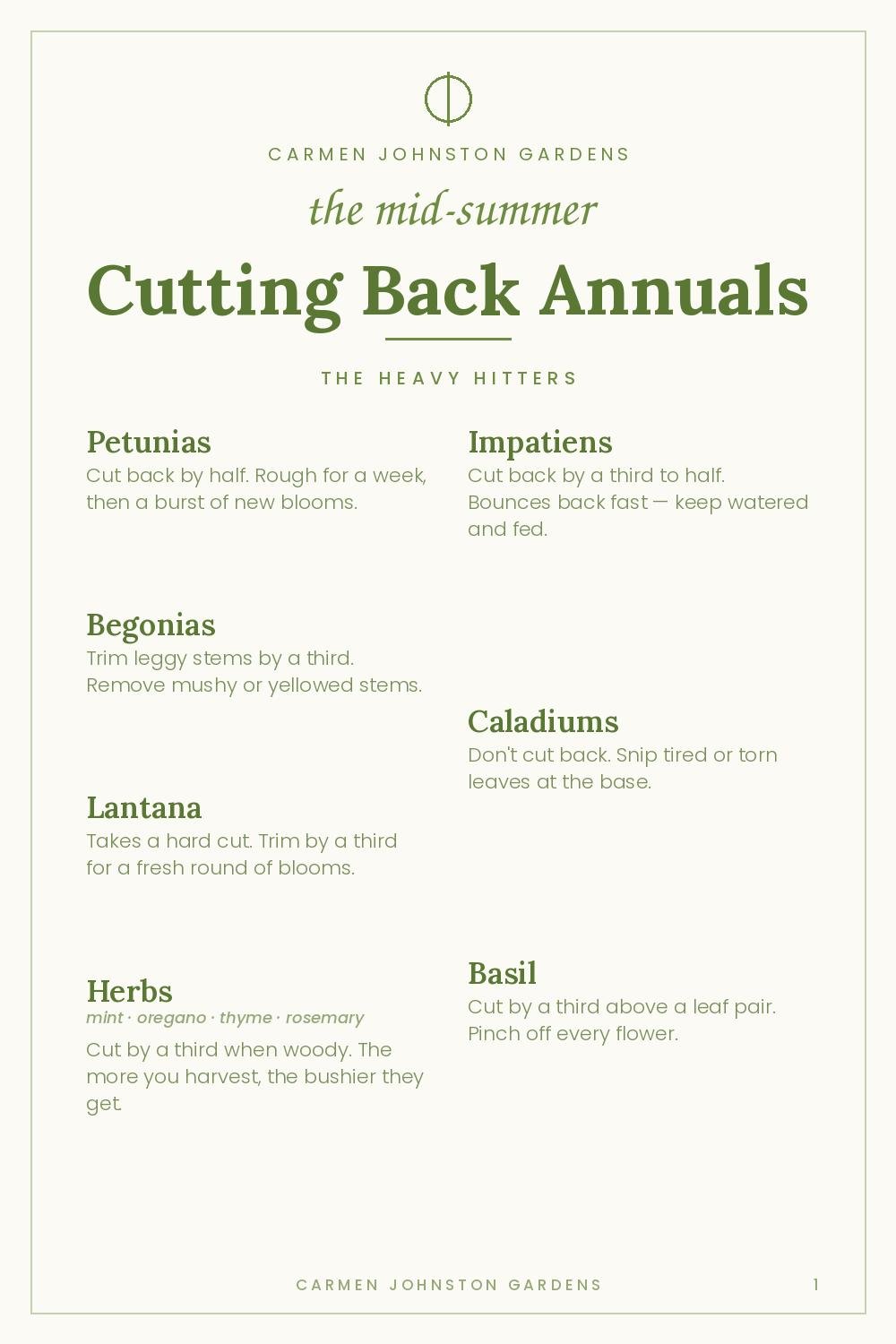
Impatiens: Cut back by one-third to one-half. They bounce back fast in the heat as long as you keep them watered and fed.
Begonias: Pinch or cut back the leggy stems by a few inches, about one-third of the plant. Remove any mushy or yellowed stems at the base while you're in there.
Geraniums: Deadhead spent blooms and cut leggy stems back by one-third.
Coleus: Pinch back by one-third and remove flower spikes. It's all about that gorgeous foliage.
Caladiums: These beauties are all about the foliage, so you're not cutting the whole plant back. Just snip off any tired, faded, or torn leaves at the base. New leaves will keep pushing up from the bulb all summer.
Lantana: This one can take a hard cut. Trim back by one-third and it will reward you with a fresh round of blooms. Lantana loves the heat, so don't be shy.
Angelonia: Cut spent flower spikes back by one-third.
Zinnias: Cut deep for bouquets. Cutting just above a set of leaves makes the plant branch and bloom more.
Marigolds: Deadhead constantly and shear back by one-third if they get tired.
Vinca: Usually stays tidy, but a light one-third trim freshens it up if it stretches.
Torenia: Pinch back by one-third to keep it full and blooming.
Verbena: Shear back by one-third when blooms fade for a fresh flush.
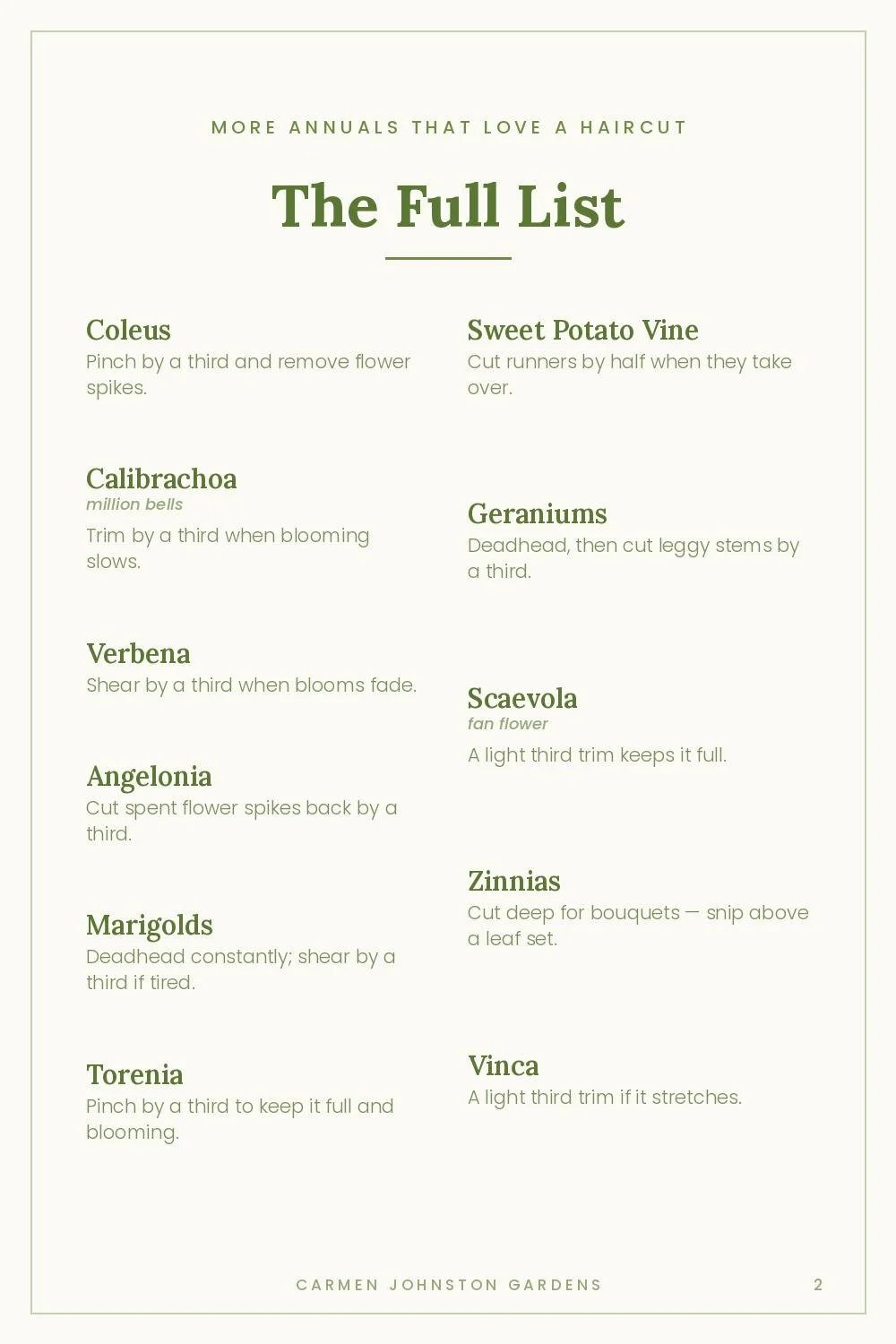
More Annuals That Love A Mid-Summer Haircut
Add these to your cut-back list:
Basil: Pinch or cut stems back by one-third, always just above a pair of leaves. And here's the big one: pinch off every flower you see. Once basil flowers, the leaves turn bitter and the plant stops producing. Cut it, use it, repeat.
Other herbs (mint, oregano, thyme, rosemary): Cut back by one-third any time they get woody or sprawling. Regular harvesting is basically free pruning. The more you cut, the bushier they get.
Sweet potato vine: Cut those runners back by half when they take over. They grow back fast.
Calibrachoa (million bells): Trim back by one-third when blooming slows.
Scaevola (fan flower): Light trim of one-third keeps it full.
Step Two: Feed Your Annuals for more color
Cutting back without feeding is like asking your plants to run a race on an empty stomach. Right after you cut back, fertilize.
Water-soluble fertilizer: I use Jack's Classic Blossom Booster (10-30-20) every week to two weeks all summer long. That middle number is phosphorus, and that's what pushes blooms. Mix it with water and feed your containers and beds.
Slow-release fertilizer: Sprinkle Nelson's ColorStar around your plants for steady feeding between waterings. The combination of slow-release plus weekly water-soluble is the secret to containers that look like they belong on a magazine cover.

Want to see a play-by-play of how I cut back my annuals?
Watch my video where I show you how to do it correctly.
Seeing Yellow Leaves After Heavy Rain? Your Plants Are Chlorotic
If we get a stretch of heavy summer rain and your plants turn pale yellow or yellow-green, don't panic and don't give up. Your plants are chlorotic, which means they've lost their chlorophyll, that green pigment that keeps them healthy and growing.
Here's what happened: all that rain leached the nutrients right out of the soil. Containers are the worst about this because water runs straight through and takes the nitrogen with it. Your plants aren't dying. They're hungry.
THE FIX FOR YELLOW LEAVES:
Wait until the soil drains and isn't soggy. Feeding waterlogged roots does no good.
Feed with a water-soluble fertilizer like Jack's Classic. The nutrients get to the roots immediately.
Reapply your slow-release fertilizer, because heavy rain speeds up how fast it releases and runs out.
Give it 7 to 10 days. You'll see the green come back, starting with the new growth.
Mid-summer is not the finish line, y'all. It's halftime. Cut back, feed, and your annuals will carry you in full color all the way to frost. Don't give up on them. They're not done, they're just getting started.
From the soil up, Carmen

Shop my Amazon Favorites!
Shop my Amazon storefront for chic + practical finds to pretty up your home inside and out! Every pick is personally bought and tested by me—no false advertising, just fabulous finds you can trust!