
5 Things Your Garden Needs After a Heat Wave
Y'all, when these hot summer temps finally break, your garden is just as relieved as you are. Here's a fun fact: most plants actually stop growing when temperatures climb above 86 degrees. Photosynthesis slows way down and they shift into pure survival mode. So when the heat breaks, your job is recovery, not a makeover.
Here's a quick checklist of exactly what to do in your garden after the heat wave ends:

First, Water—but not too often
1. Water deep, not often. During a heat wave, plants can lose water through their leaves faster than the roots can pull it up, even in moist soil. That's why things wilt at 3pm and perk up by morning. Once it cools, give everything a long, slow soak at the base early in the morning. You want water reaching 6 to 8 inches down where the roots live. Stick your finger or a moisture meter in the soil to check.
2. Hold off on pruning. Those crispy leaves are ugly, but they're doing a job, shading and protecting the healthy growth underneath from sunscald. Wait 1 to 2 weeks after the heat breaks, then only cut what's truly brown and dead. Anything with green left in it can still feed the plant.
3. Skip the fertilizer until temps settle. Here's your number: wait until daytime highs are consistently below 85 degrees and nighttime temps drop below 70 before you feed anything. Fertilizing a heat-stressed plant pushes tender new growth it can't support, and the salts in fertilizer can burn already-stressed roots. Your veggies will tell you the same story. Tomatoes drop their blossoms when days hit 90 or nights stay above 75, so there's no point feeding for fruit that can't set. When temps settle and you see fresh new growth, start back with a half-strength feeding.
4. Refresh your mulch to 2 to 3 inches. Bare soil can hit 120 degrees or more in full summer sun, hot enough to cook shallow roots. A proper mulch layer keeps soil temps 10 or more degrees cooler and cuts water evaporation by up to 70 percent. Keep it a couple inches back from stems and trunks so you don't invite rot.
5. Check your containers first. Pots heat up fast because roots are surrounded by warm air on all sides, and container soil can run 20 degrees hotter than ground soil. Dark pots are the worst offenders. Water until it runs out the bottom, and if the water rushes straight through, the soil has pulled away from the sides. Set the pot in a saucer of water for an hour so it can soak up from below. Move anything struggling into afternoon shade to recover.
One more thing: keep an eye out for spider mites over the next couple weeks. They love hot, dry, stressed plants and they'll show up right when your garden is most vulnerable. Look for fine webbing and speckled leaves, and a strong blast of water knocks them right back.
Remember, plants are resilient. Give them a little grace, a lot of water, and hold that fertilizer until the thermometer says go.
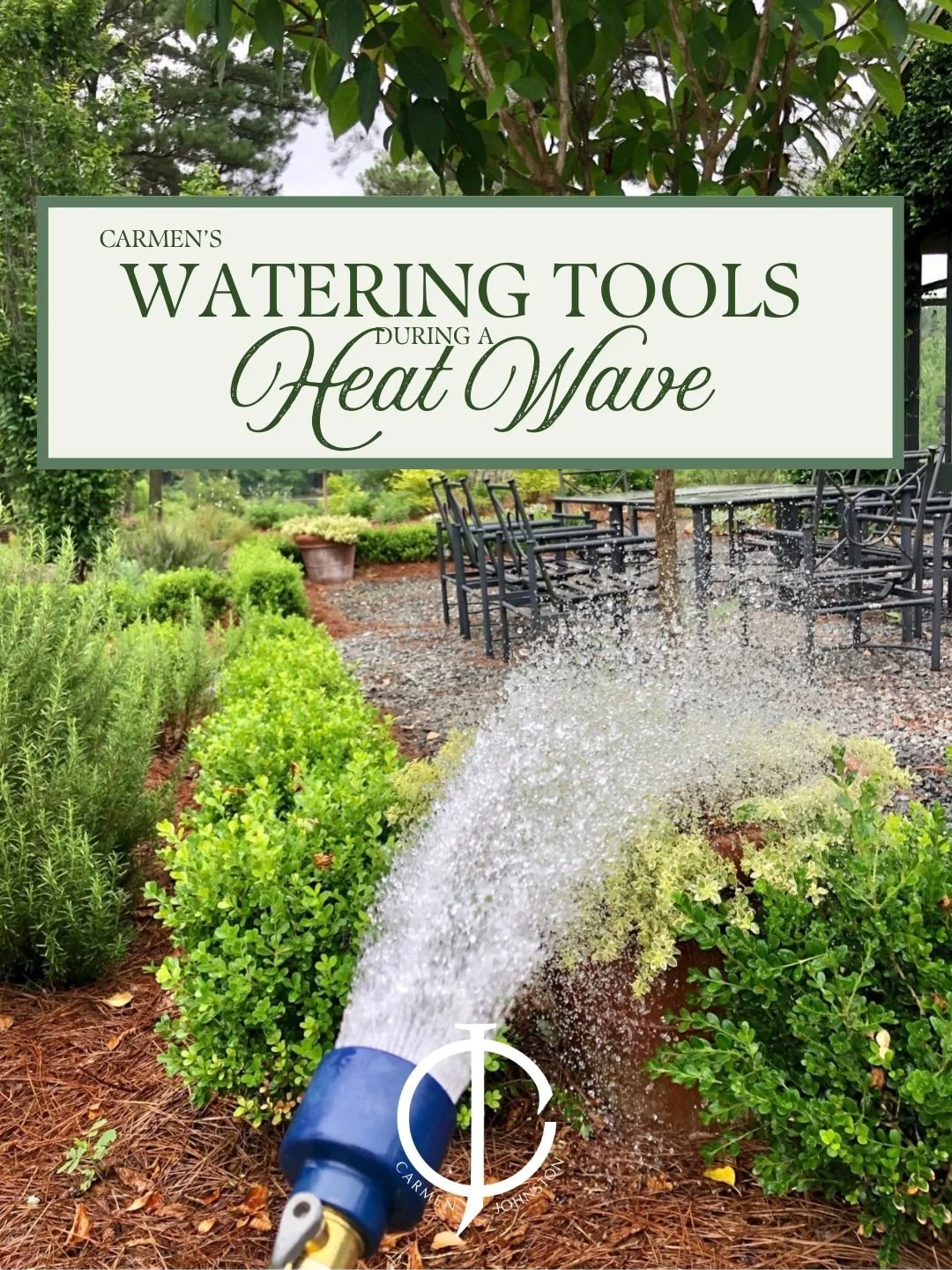
If you are still in the midst of intense heat wave, read on…
Find more sUmmer gardening content you may enjoy…



Shop my Amazon Favorites!
Shop my Amazon storefront for chic + practical finds to pretty up your home inside and out! Every pick is personally bought and tested by me—no false advertising, just fabulous finds you can trust!