
How to Keep Your Yard Alive in This Intense Heat
Hey friend. I have been getting so many of the same questions this week, and I want to get you all the answers in one place. We are in the middle of a serious heat wave. A big heat dome has parked itself over most of the country, and folks from the South all the way up to the Northeast are looking at temperatures in the 90s and 100s, with the heat index pushing even higher because of all this humidity. Some cities won't even drop below 80 at night.
That kind of heat is hard on people, and it is hard on our plants too. So let's talk about how to keep your lawn, your trees, your shrubs, your beds, and your containers alive until this breaks. Take a deep breath. You can do this, and I am right here in the garden with you!
Keep reading to learn what to do for your plants during intense heat.
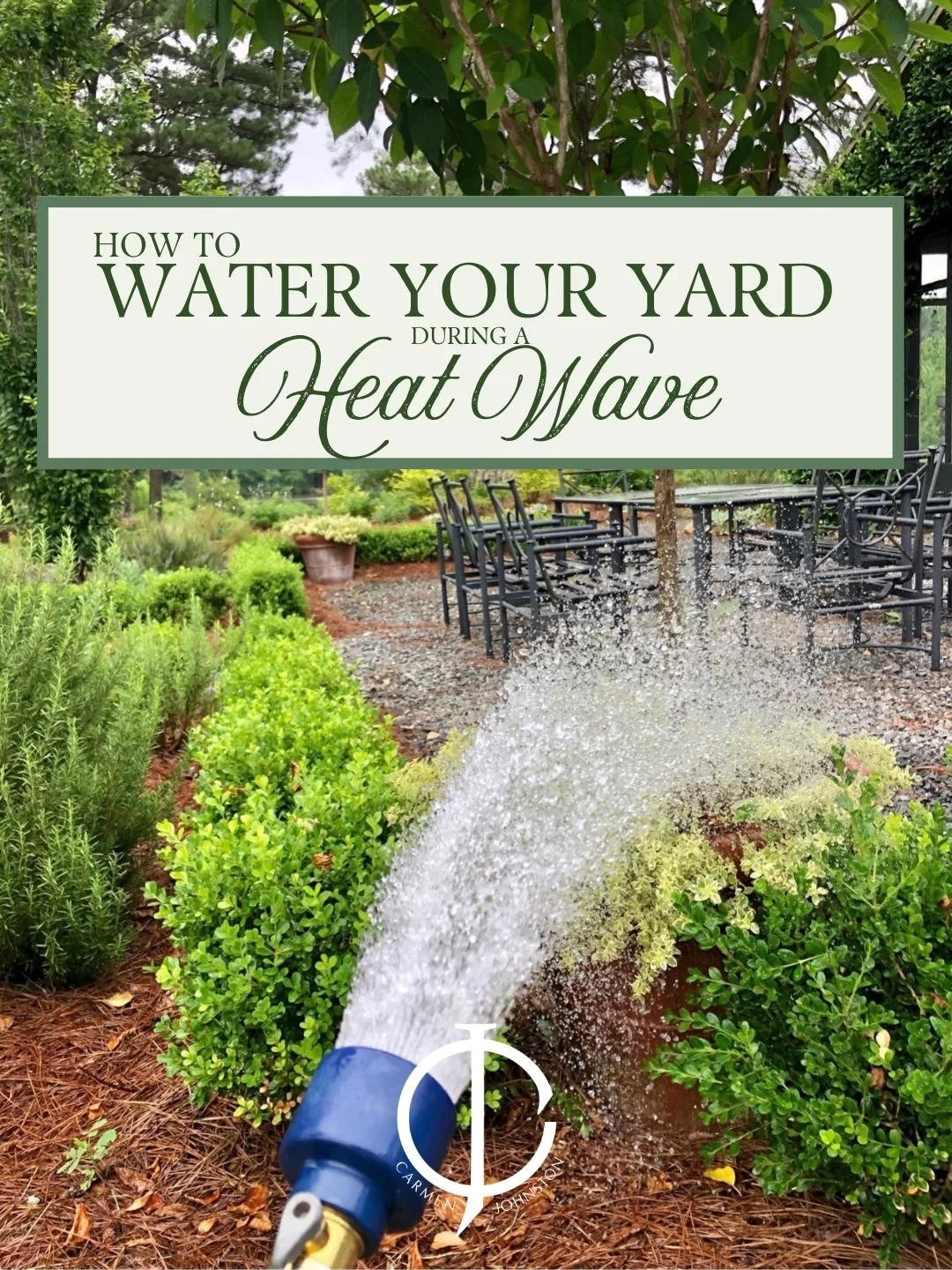
The Golden Rules of Watering in Extreme Heat
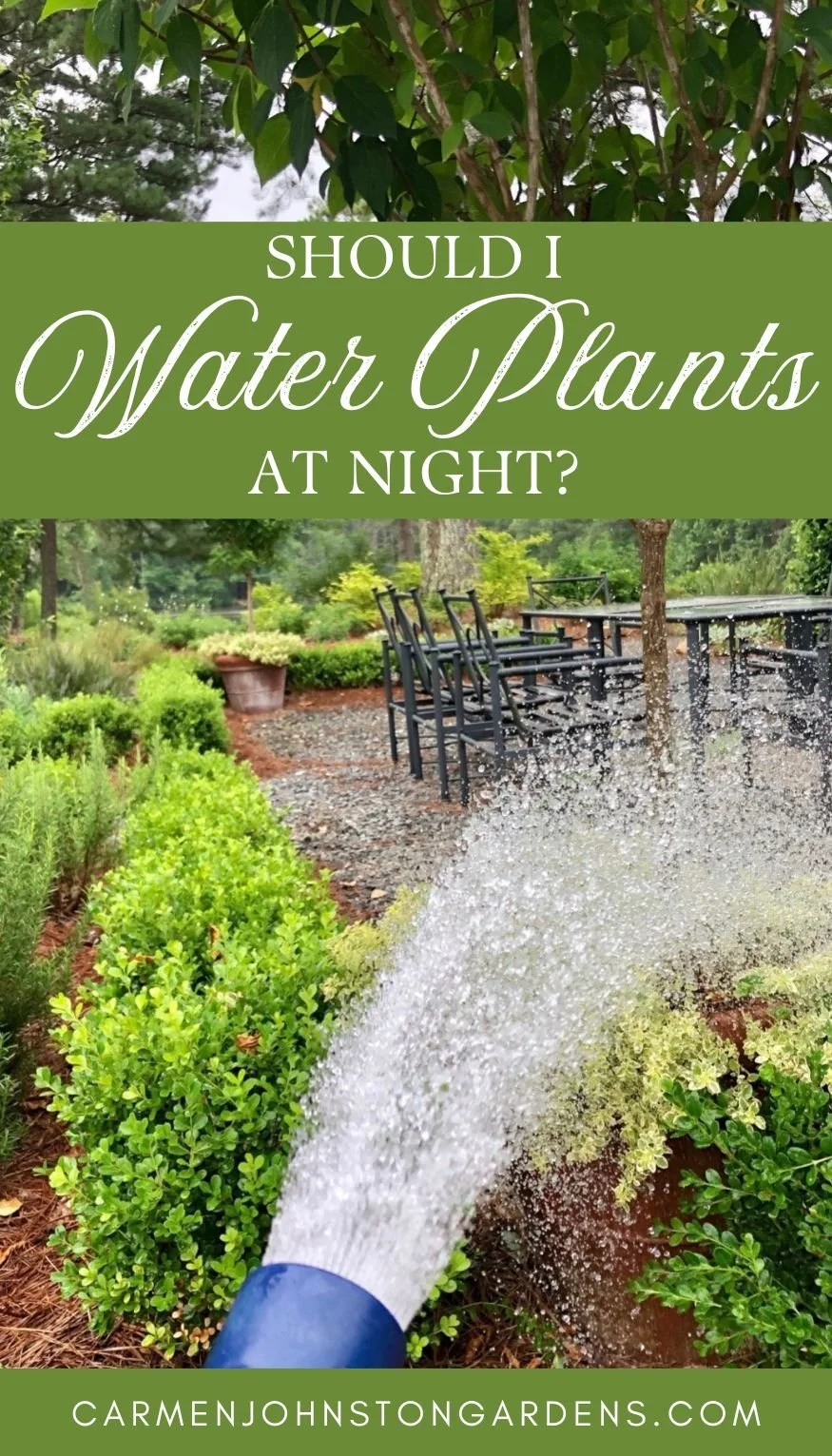
1. Water early in the morning. The best time is before the sun is really up, anywhere from 4 a.m. to 8 a.m. The ground is cool, the wind is calm, and the water soaks down to the roots before it can evaporate. If your plants are wilting badly by late afternoon, you can give them a second drink in the evening, but morning is always your main watering.
2. Water deeply, not often. This is the big one. A deep, slow soak that reaches down into the soil trains roots to grow down deep where it stays cooler and moister. A quick splash every day trains roots to stay shallow near the hot surface, and those are the first plants to fry. Fewer, longer waterings beat daily sprinkles every single time.
3. Water the soil, not the leaves. Aim your water at the base of the plant, down at the roots, where it actually does the work. Wetting the leaves in the middle of the day wastes water and can even scorch foliage.
4. Mulch is your best friend's best friend. Two to three inches of mulch over your beds and around your trees is like sunscreen and a cooler for the soil. It holds moisture in, keeps roots cool, and means you water less often. If you do one extra thing this week, make it mulch.
After the intense heat begins cooling off, here is the information you’ll need to care for your plants once the heat wave temperatures are finally breaking.
Your Garden's Survival Guide to Watering When It's Brutally Hot Out There
The One Thing To Remember about gardening during a heat wave
When it is this hot, your plants are not really growing. They are surviving. Your whole job right now is to help them hold on, not to push them to do anything new. Everything in this guide comes back to that idea. We are playing defense.
How Much Water Does Everything Actually Need?
Here is the rule of thumb to keep in your back pocket: most landscapes want about one inch of water per week. In heat like this, bump that up to about one and a half to two inches a week, and split it across two or three deep waterings instead of one.
But how do you know when you have given an inch? My easy tricks:
The tuna can trick. Set a few empty tuna cans or shallow cans (they are about an inch tall) out in the area you are watering. Run your sprinkler or soaker, and when the cans are full, you have put down about an inch. Look at your watch and note how long it took. Now you know exactly how long to run that zone every time. Do this once and you never have to guess again.
The finger test. Stick your finger or a screwdriver down into the soil. If it is dry two to three inches down, it is time to water. If it is still damp, wait. Your plants will tell you what they need if you ask them.
Use a moisture meter (this is when they shine). If there is ever a week to pull out a moisture meter, it is this one. These little tools are inexpensive, you just push the probe down into the soil and it tells you right away whether things are dry, moist, or wet. They take all the guesswork out of it, and they are especially wonderful for containers and deep pots where the finger test only reaches the top inch. A moisture meter also keeps you from the other mistake folks make in a panic, which is overwatering. When it is this hot it is tempting to drench everything constantly, but soggy roots can rot and die just as fast as dry ones. The meter tells you the truth so you water exactly when your plants actually need it. If you have one sitting in a drawer, this is the week to dig it out. If you do not, it is a small purchase that pays you back all summer long.
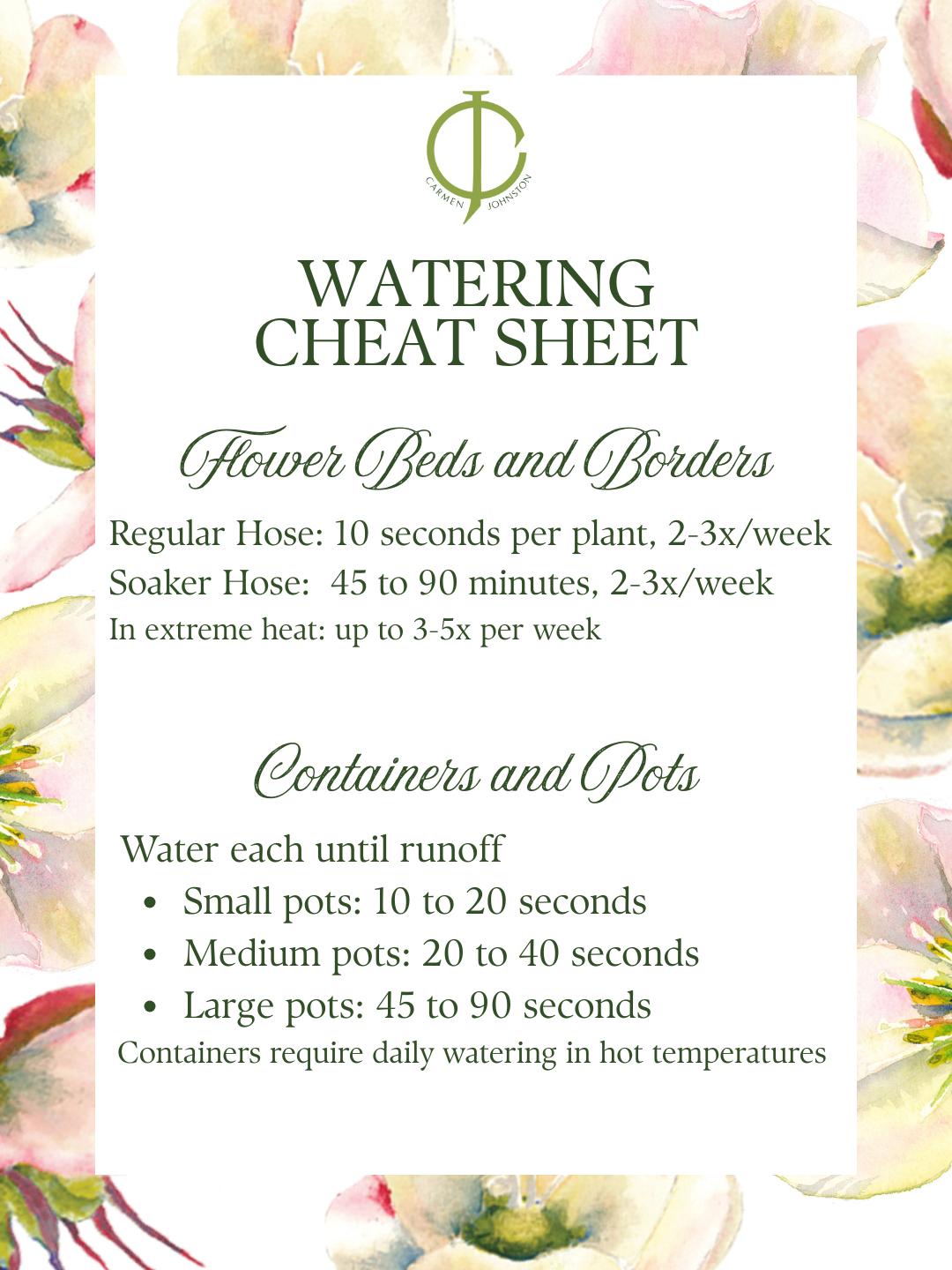
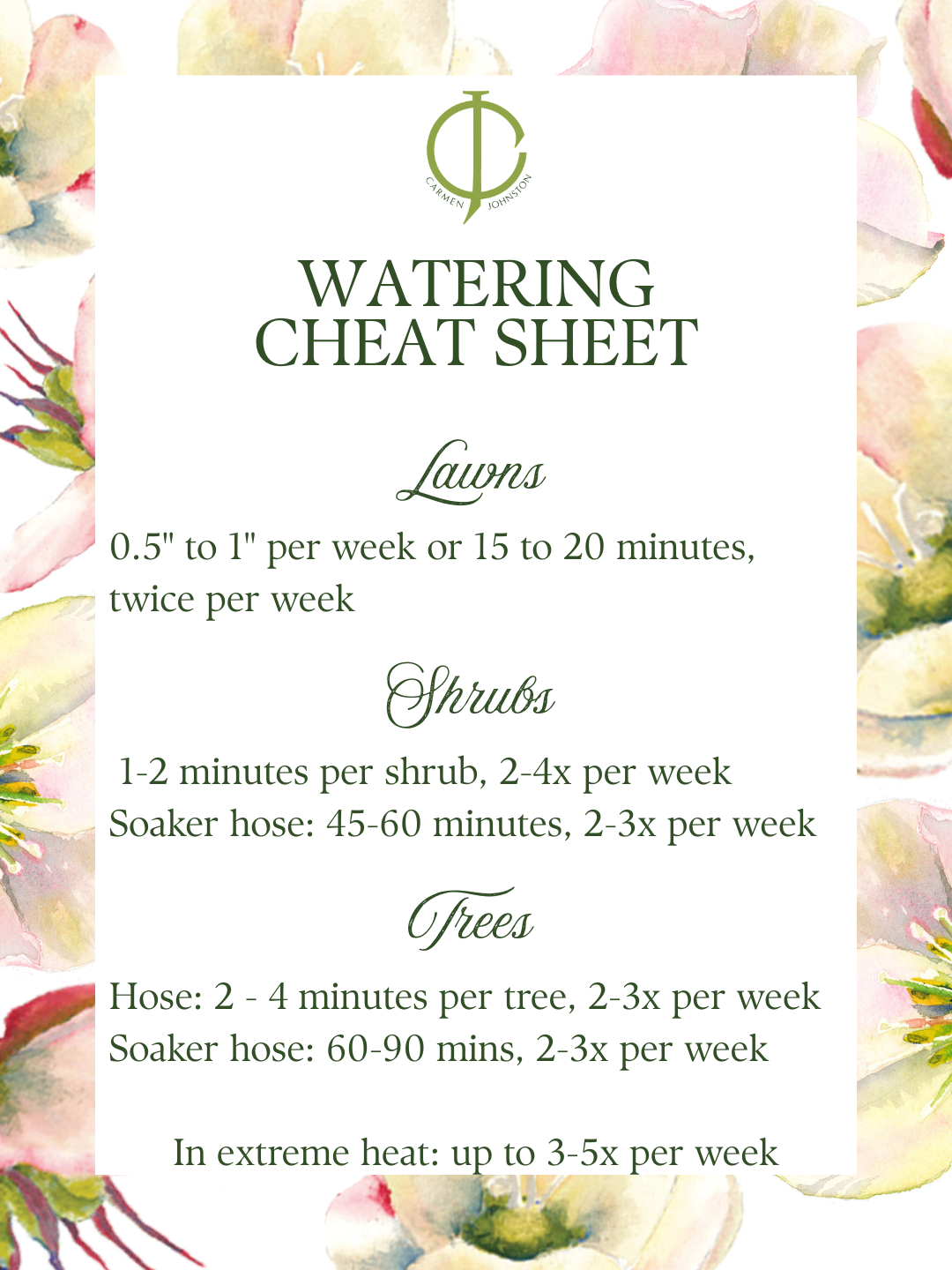
DoWNLOAD YOUR PRINTABLE WATERING CHEAT SHEETS HERE
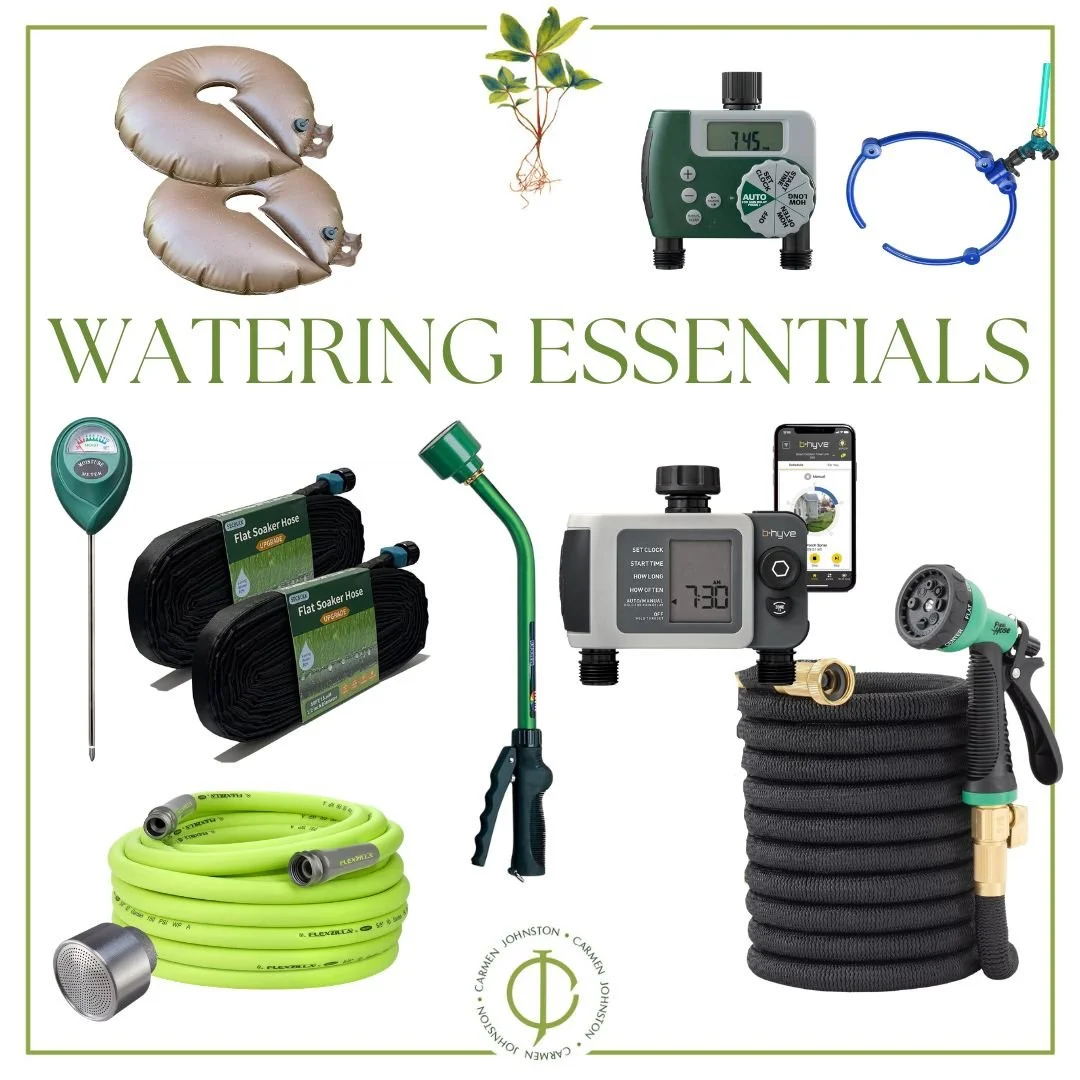
Carmen’s Favorite Watering Tools
During Intense Summer Heat
Watering ADVICE By What and where You Are Growing
Your Lawn
Honestly, your lawn is the toughest customer in your yard and the one I worry about least. Grass is built to go dormant and turn brown to protect itself, and most lawns bounce right back when the rain returns. If you want to keep it green, give it about one inch to one and a half inches of water per week, in one or two deep soaks, early in the morning. If you would rather conserve water, let it go a little tan and save your effort for the plants that really need you. A brown lawn is usually just sleeping, not dead.
Your Trees
Your trees are your most valuable plants and the most expensive to replace, so they get priority.
Newly planted trees (anything in the ground less than two or three years) cannot fend for themselves yet. They need a slow, deep soak two to three times a week in this heat. A good rule is about 10 to 15 gallons each time. Let a hose trickle slowly at the base for 20 to 30 minutes, or use a slow-release watering bag if you have one.
Established trees have deep roots and handle heat better, but even they appreciate a long, deep soak once a week when it is this extreme. Run a hose slowly out at the drip line (that is the edge of the branches, where the feeder roots are) for a good while. Do not just water right at the trunk.
Your Shrubs
Shrubs fall in the middle. Newer shrubs need a deep soak two to three times a week. Established shrubs usually do fine with one good deep watering a week. Water at the base, and a ring of mulch around each one works wonders.
Your Annual Beds
Your annuals are the divas of the garden. They have shallow roots, they are working hard to bloom, and they will wilt fast in this heat. Most annual beds want a deep watering every two to three days right now, and you may need to check them daily. A soaker hose snaked through the bed is the easiest way to do this. Aim for that one to one and a half inches a week, and watch them closely, because they will droop dramatically the moment they get thirsty.
Your Perennial beds
Established perennials are tougher than annuals and usually get by on a deep soak once or twice a week. Newly planted ones this season need more attention, more like every two to three days. Mulch, mulch, mulch.
Your Containers (Read This One Twice)
Containers are the first thing to die in a heat wave, and they are where most of your questions are coming from. Here is why: a pot has a tiny bit of soil, it is exposed to hot air on all sides, and it dries out incredibly fast. The smaller the pot, the faster it cooks.
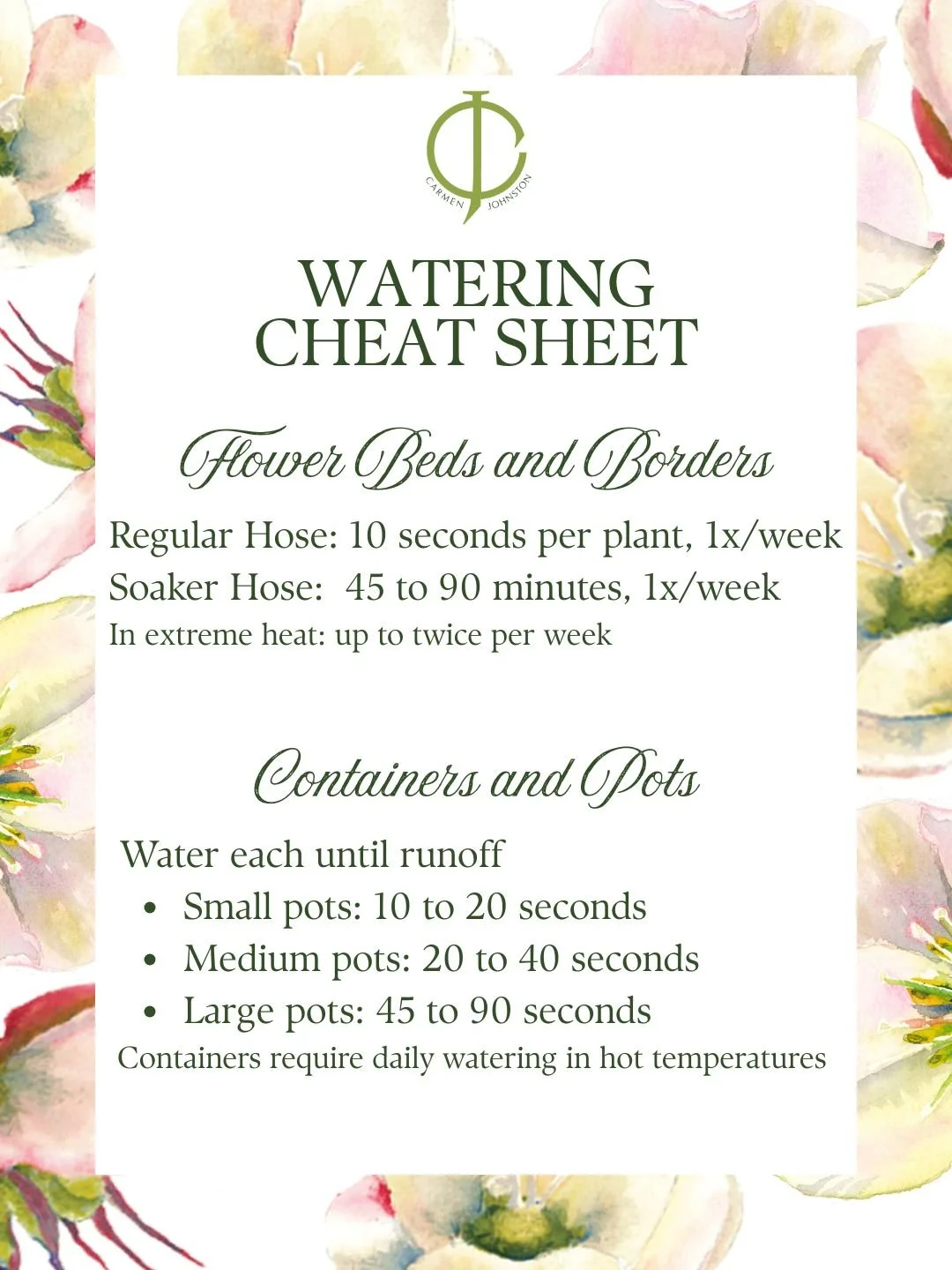
Containers almost always need water every single day in this heat, and very often twice a day. Hanging baskets and small pots especially. Water them deeply in the morning until you see water running out the drainage holes, then check them again in the late afternoon. If the top inch is dry and the pot feels light, give them another good drink in the evening.
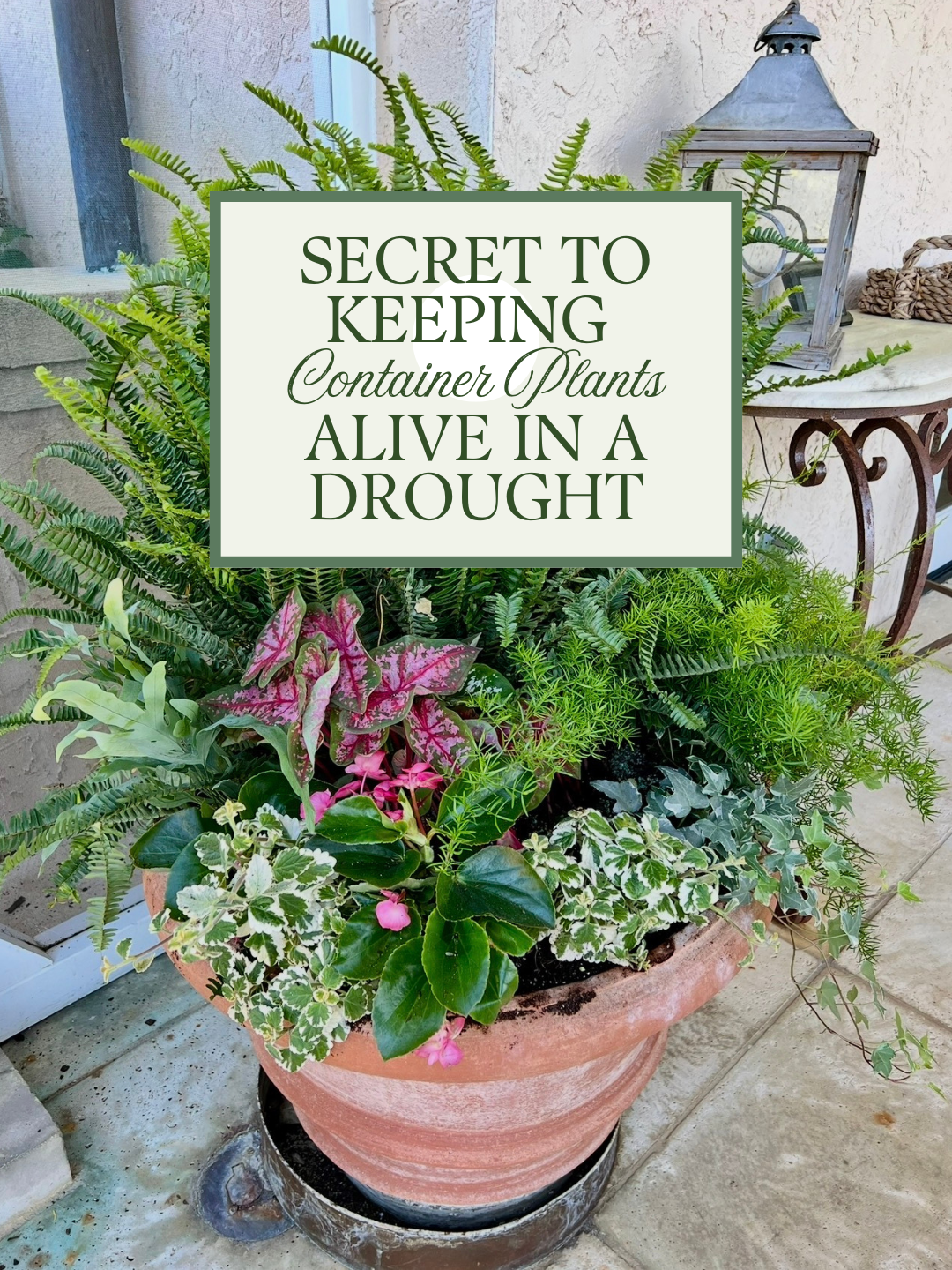
A few container lifesavers for a heat wave:
Move pots into afternoon shade if you can. Even pulling them under a porch or against the house on the shady side makes a huge difference.
Group them together so they shade each other and hold humidity.
Set saucers under them this week to catch and hold a little extra water (just empty them after a few hours so you are not breeding mosquitoes).
If a basket gets so dry the water runs straight through, set the whole pot in a bucket of water for 20 minutes to rehydrate the root ball from the bottom up.
How Long Do I Run My Soaker Hose?
Soaker hoses are wonderful in heat because they put water right at the roots, slow and low, with almost no waste. As a starting point, run a soaker hose for about 30 minutes to an hour per zone, two to three times a week, early in the morning.
But every soaker hose and water pressure is a little different, so do this once: run it for 30 minutes, then dig down with your finger and see how deep the moisture went. You want it damp about six inches down. If it is dry below that, run it longer next time. Once you find your number, you are set.
How Long Do I Run My Irrigation System?
This one depends on what kind of heads you have, which is why the tuna can trick is so handy here.
Spray heads (the little fan-shaped sprays) put out a lot of water fast, so they usually run shorter, around 15 to 20 minutes per zone.
Rotor heads (the ones that turn and shoot a stream) put water down more slowly, so they run longer, around 30 to 40 minutes per zone.
Drip zones in beds run the longest, often 45 minutes to an hour or more.
Set out your tuna cans, run a zone, and time how long it takes to collect an inch. In this heat, water two or three mornings a week rather than a little bit every day. And please check your system actually runs before you trust it. A clogged head or a broken line during a heat wave can lose you a whole bed before you notice.
When To Water Twice A Day
Most of your plants do not need twice-a-day watering, and overdoing it can drown roots. But there are times in extreme heat when a second watering is exactly right:
Containers, hanging baskets, and small pots. These are your number one candidates. Morning and again in the late afternoon or evening when they are dry and light.
Newly planted anything. New plants have no root system to fall back on, so a second check in the evening is smart.
Vegetable gardens in fruit, especially things in pots or raised beds.
Any plant that is wilting badly by late day even though you watered in the morning. A gentle evening drink at the base will help it recover overnight.
For your in-ground, established beds and lawn, stick with one deep morning watering. Deeper is better than more often for those.
What to do for your yard If Your town implement Watering Restrictions
A lot of towns put limits on outdoor watering during heat waves, so check your local rules first. If you can only water on certain days or certain hours, here is how to make every drop count:
Triage your garden. Save your water for the plants you cannot easily replace: your trees first, then established shrubs and perennials, then your containers and annuals. Let the lawn go tan. It will recover.
Water deep on the days you are allowed. One thorough soak that reaches the roots beats several shallow ones, and it carries plants further between allowed days.
Mulch heavily. This is your single best move under restrictions. It can cut how often you need to water roughly in half.
Hand-water the priorities. A watering can or a hose at the base of your most important plants uses far less water than a sprinkler and puts it exactly where it counts.
Catch what you use indoors. The water you run waiting for the shower to warm up, or the bowl you rinse veggies in, can go straight to a thirsty pot.
This Is Why Rain Barrels Are So Smart
If this heat wave has you wishing for a backup water supply, let me put in a word for rain barrels. A single good rain can fill a barrel with dozens of gallons of free water, and that water is yours to use even when restrictions are on, because you are not pulling from the city supply. When the next thunderstorm rolls through, you will be so glad you caught it.
Set a barrel under a downspout, screen the top so it stays clean and mosquito-free, and you have got an emergency reserve for exactly weeks like this one. It is one of the kindest things you can do for your garden and your water bill. I will be sharing the setup I use, because Tommy and I keep ours running all season.
The Things You Absolutely Do NOT Do In This Heat
Friend, this part is just as important as the watering. When it is this hot, your plants are stressed and just trying to survive. The worst thing you can do is ask them to do more work. So put down the pruners and the fertilizer this week.
Do NOT fertilize. I mean it, friend. I know it feels like you are helping, but this is the worst possible time to feed. Fertilizer pushes plants to put out tender new growth, and new growth in a heat wave gets scorched the second it appears. Worse, fertilizer salts can actually burn roots that are already stressed and dry. Hold off on all of it, your lawn food, your bloom boosters, all of it, until this heat breaks and your plants have recovered. Feeding a heat-stressed plant is like handing someone a giant meal when they are running a fever. Just water and wait.
Do NOT prune. Pruning tells a plant to grow, and that growth costs energy your plant does not have to spare right now. Those leaves you are tempted to cut off are also shading the plant and the soil. The only exception is removing something clearly dead or diseased. Save your real pruning for cooler days.
Do NOT plant anything new. A heat wave is the hardest possible time to get a new plant established. Its roots cannot keep up with the heat, and you will likely lose it. Keep new plants in their pots in the shade, water them, and wait for a cooler stretch to put them in the ground.
Do NOT transplant or move plants. Same reason. Disturbing roots in extreme heat is incredibly hard on a plant. Let everybody stay put until things cool down.
Do NOT mow your lawn short. Set your mower blade higher and leave the grass a little long. Taller grass shades its own roots and the soil, holds moisture, and handles heat far better than a close cut. And mow in the cool of the evening, never the heat of the day.
Do NOT water in the heat of the day, on the leaves. Midday watering mostly evaporates before it helps, and water sitting on leaves under that blazing sun can scorch them. Stick to early morning.
Do NOT panic over a little afternoon wilt. Many plants wilt in the afternoon heat to protect themselves, then perk right back up in the evening. Check them in the morning. If they are perky again, they are fine. If they are still wilted in the cool morning, then they truly need water.
How To Tell Heat Stress From A Real Problem
It helps to know what you are looking at. Leaves that wilt midday but recover by morning are just coping. Leaves with crispy brown edges or scorched patches are sunburned and stressed. Yellowing lower leaves can mean too much water, so check that you are not overdoing it. When in doubt, feel the soil two inches down before you reach for the hose. The soil tells the truth.

Your Quick Heat Wave Watering Checklist
Water early in the morning, deep and slow
Containers daily, often twice a day
Trees and big shrubs get priority, soak them deep
Two to three inches of mulch everywhere you can
Move pots into shade where possible
No fertilizing, no pruning, no planting, no transplanting
Mow high, mow in the evening
Check soil with your finger or a Moisture Meter before watering
Catch rain in a rain barrel when it comes
You have got this, friend. A heat wave feels scary, but plants are tougher than we give them credit for, and a little smart watering goes a long way. Keep your trees and your pots happy, give your lawn permission to nap, and we will all come out the other side of this just fine. Reach out anytime, I am always here in the garden with you.
Stay cool out there, and don't forget to drink your own water too.
From the soil up.
xoxo
Carmen
related content you may enjoy!


Shop my Amazon Favorites!
Shop my Amazon storefront for chic + practical finds to pretty up your home inside and out! Every pick is personally bought and tested by me—no false advertising, just fabulous finds you can trust!