How to use Mulch in the Garden: The Ultimate Guide to Landscapes
Mulching and Soil Conditioning, The Foundation of a Healthy Garden
If there is one simple step that can completely change the health and look of your garden, it is mulching. When you pair mulch with a rich soil conditioner, you are not just covering the ground, you are building a living, breathing foundation that supports every plant in your landscape. Done right, this combination improves soil, protects roots, and keeps your garden looking polished through every season.
Why Mulch Matters in Every Garden
Mulch does far more than make a bed look finished. It quietly works beneath the surface to support plant health day after day.
Key benefits of mulch:
Helps soil hold moisture, so you water less often
Regulates soil temperature during heat and cold
Blocks sunlight from reaching weeds, reducing growth
Breaks down over time to improve soil structure
When you add a soil conditioner underneath, you multiply those benefits by feeding the soil while the mulch protects it.
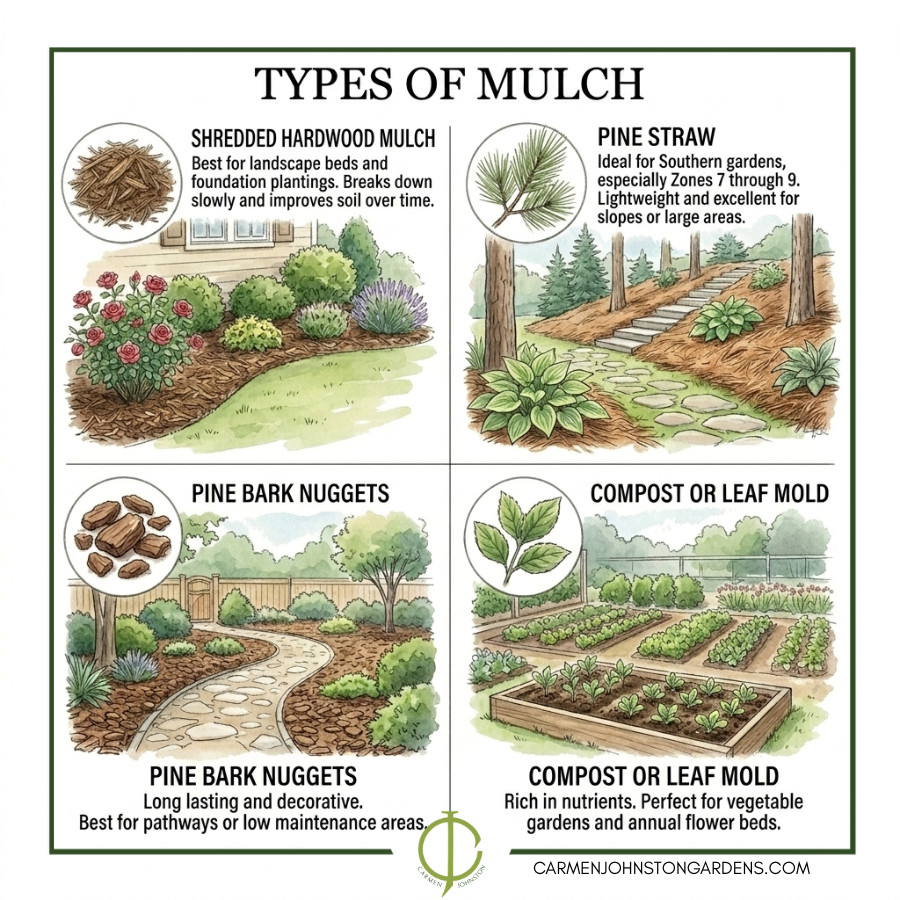
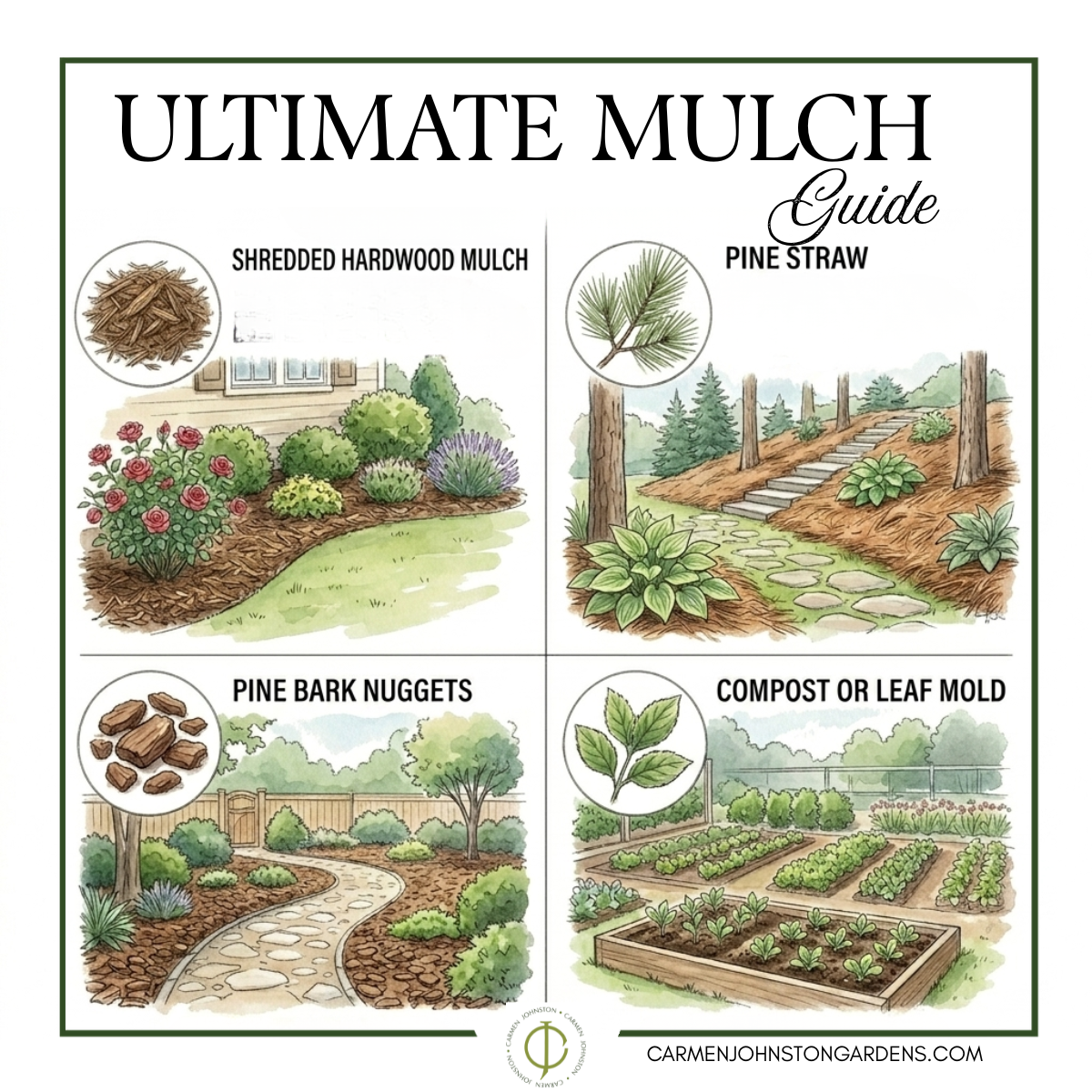
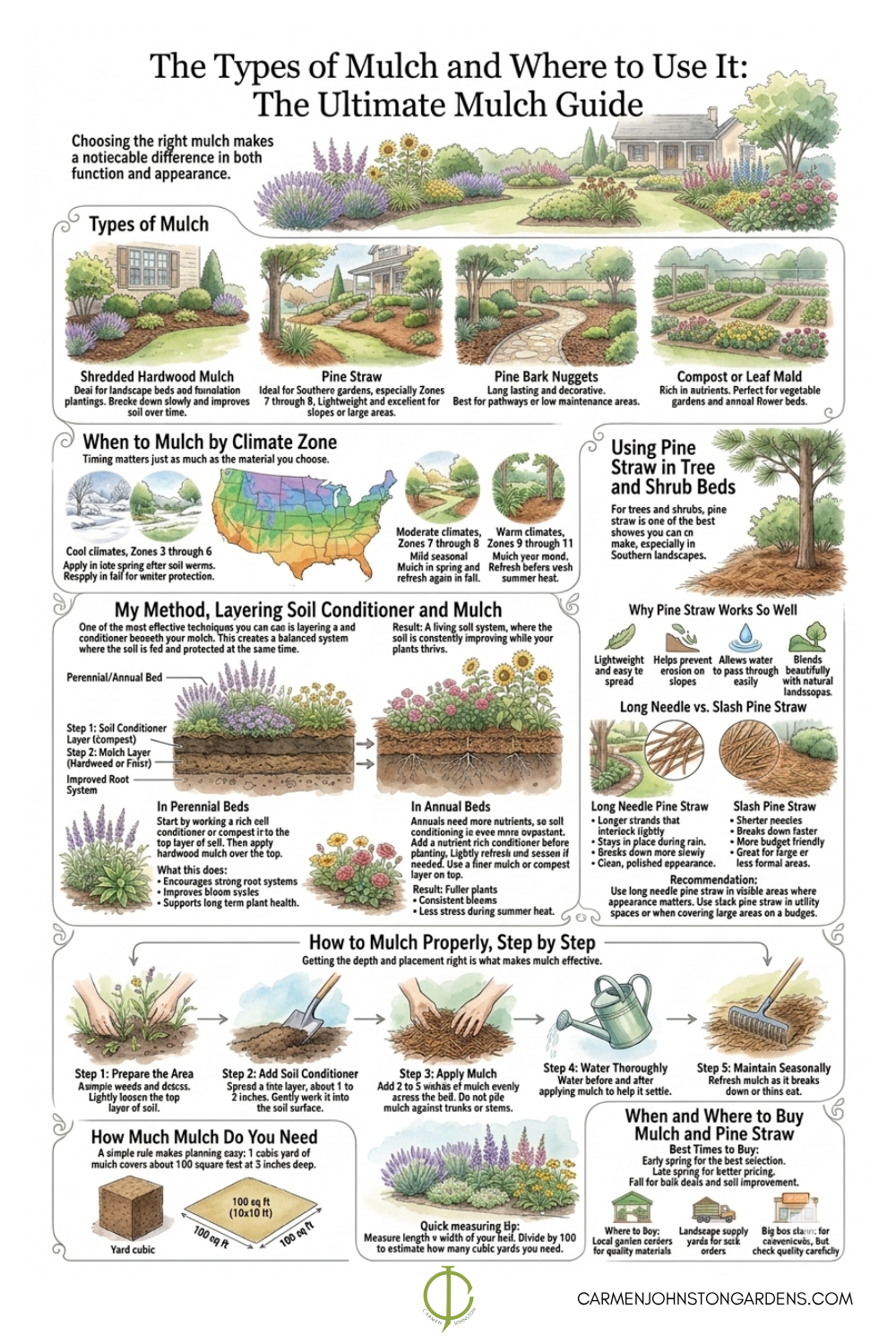
Types of Mulch and Where to Use Them
Shredded Hardwood Mulch
Best for landscape beds and foundation plantings
Breaks down slowly and improves soil over time
Pine Straw
Ideal for Southern gardens, especially Zones 7 through 9
Lightweight and excellent for slopes or large areas
Pine Bark Nuggets
Long lasting and decorative
Best for pathways or low maintenance areas
Compost or Leaf Mold
Rich in nutrients
Perfect for vegetable gardens and annual flower beds
When and Where to Buy Mulch and Pine Straw
Best Times to Buy
Early spring for the best selection
Late spring for better pricing
Fall for bulk deals and soil improvement
Where to Buy
Local garden centers for quality materials
Landscape supply yards for bulk orders
Big box stores for convenience, but check quality carefully
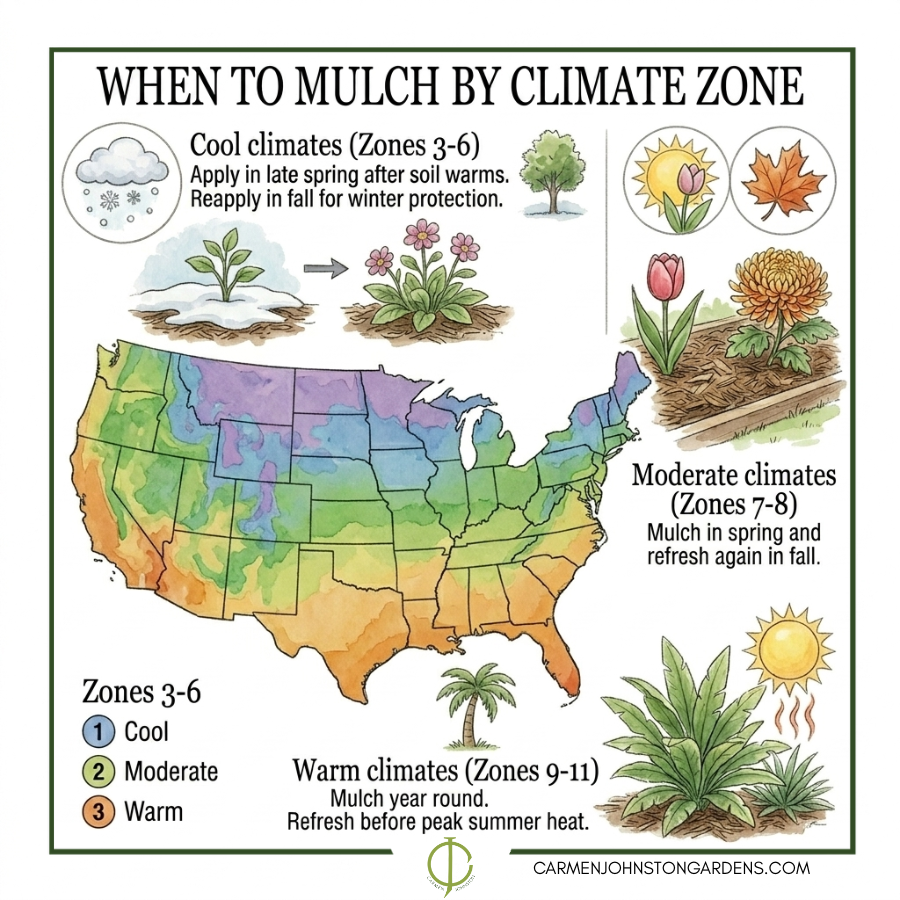
When to Mulch by Climate Zone
Timing matters just as much as the material you choose.
Cool climates, Zones 3 through 6
Apply in late spring after soil warms
Reapply in fall for winter protection
Moderate climates, Zones 7 through 8
Mulch in spring and refresh again in fall
Warm climates, Zones 9 through 11
Mulch year round
Refresh before peak summer heat
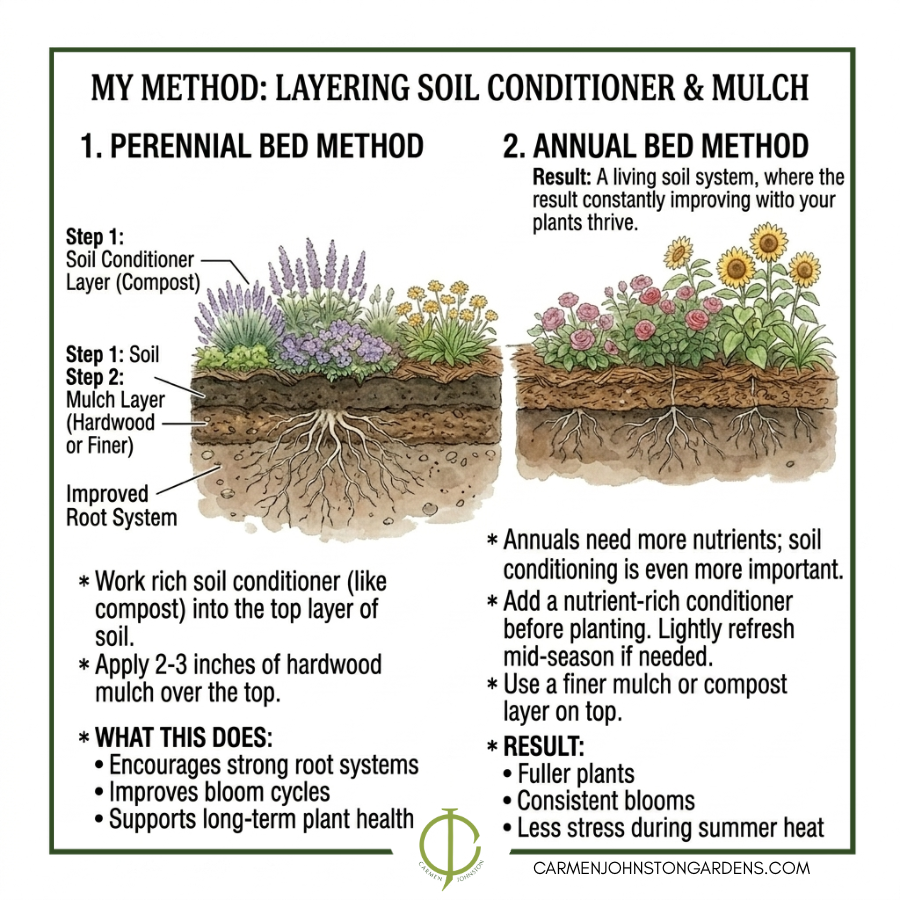
My Method, Layering Soil Conditioner and Mulch
One of the most effective techniques you can use is layering a soil conditioner beneath your mulch. This creates a balanced system where the soil is fed and protected at the same time.
In Perennial Beds
Start by working a rich soil conditioner or compost into the top layer of soil. Then apply hardwood mulch over the top.
What this does:
Encourages strong root systems
Improves bloom cycles
Supports long term plant health
In Annual Beds
Annuals need more nutrients, so soil conditioning is even more important.
Add a nutrient rich conditioner before planting
Lightly refresh mid season if needed
Use a finer mulch or compost layer on top
Result:
Fuller plants
Consistent blooms
Less stress during summer heat
This layered approach creates what I like to call a living soil system, where the soil is constantly improving while your plants thrive.

Using Pine Straw in Tree and Shrub Beds
For trees and shrubs, pine straw is one of the best choices you can make, especially in Southern landscapes.
Why Pine Straw Works So Well
Lightweight and easy to spread
Helps prevent erosion on slopes
Allows water to pass through easily
Blends beautifully with natural landscapes
Long Needle vs. Slash Pine Straw
Not all pine straw is the same, and choosing the right type matters.
Long Needle Pine Straw
Longer strands that interlock
Stays in place during rain
Breaks down more slowly
Clean, polished appearance
Slash Pine Straw
Shorter needles
Breaks down faster
More budget friendly
Great for large or less formal areas
Recommendation:
Use long needle pine straw in visible areas where appearance matters. Use slash pine straw in utility spaces or when covering large areas on a budget.
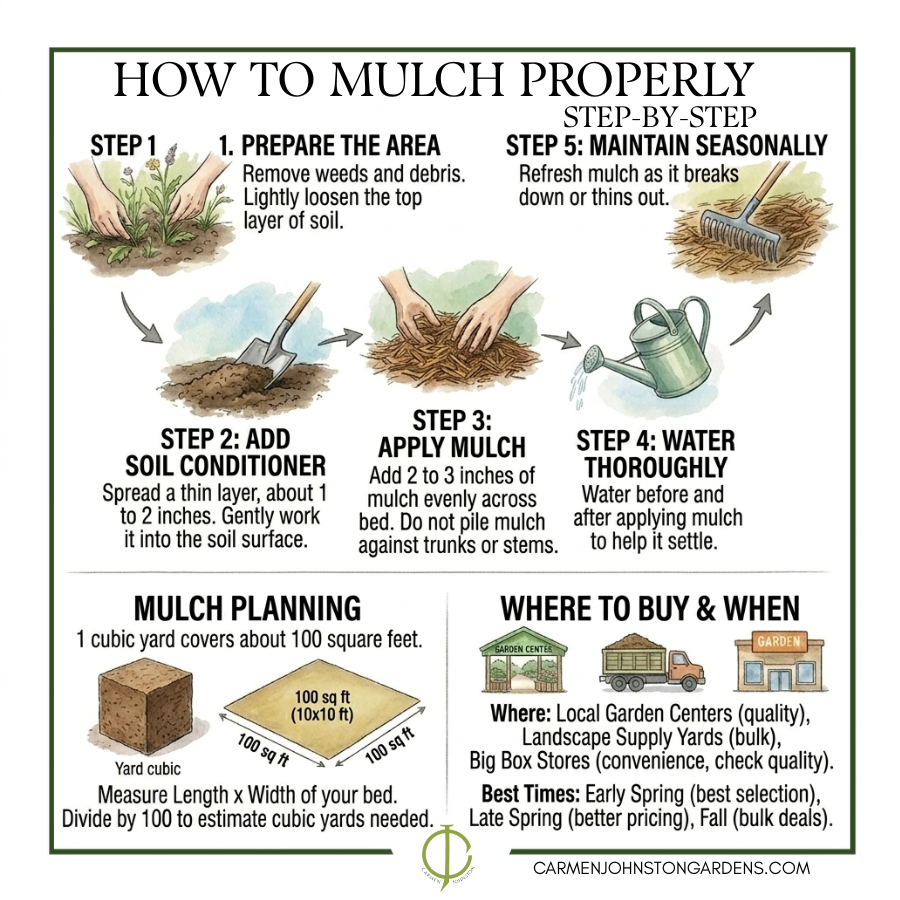
How to Mulch Properly, Step by Step
Getting the depth and placement right is what makes mulch effective.
Step 1, Prepare the Area
Remove weeds and debris
Lightly loosen the top layer of soil
Step 2, Add Soil Conditioner
Spread a thin layer, about 1 to 2 inches
Gently work it into the soil surface
Step 3, Apply Mulch
Add 2 to 3 inches of mulch evenly across the bed
Do not pile mulch against trunks or stems
Step 4, Water Thoroughly
Water before and after applying mulch to help it settle
Step 5, Maintain Seasonally
Refresh mulch as it breaks down or thins out
How Much Mulch Do You Need
A simple rule makes planning easy:
1 cubic yard of mulch covers about 100 square feet at 3 inches deep
Quick measuring tip:
Measure length × width of your bed
Divide by 100 to estimate how many cubic yards you need
Closing Thoughts
Mulching is one of those simple garden tasks that pays off in a big way. When you take the time to layer in a soil conditioner and choose the right mulch for each space, you are building healthier soil, stronger plants, and a garden that looks beautiful through every season. A little effort now creates lasting results that only get better with time.
Frequently Asked Questions
How often should I replace mulch?
Most mulch should be refreshed once or twice a year, depending on how quickly it breaks down.
Can you put mulch directly on soil without conditioner?
You can, but adding a soil conditioner underneath gives much better long term results.
Is pine straw better than wood mulch?
It depends on the space. Pine straw is excellent for slopes and natural areas. Hardwood mulch is better for structured beds.
How deep should mulch be around plants?
Keep mulch at 2 to 3 inches deep. Too much can suffocate roots.
Should mulch touch plant stems or tree trunks?
No. Always leave a small gap around stems and trunks to prevent rot and pests.
Can I use mulch in vegetable gardens?
Yes. Compost or leaf mold works especially well since it adds nutrients while protecting the soil.

Shop my Amazon Favorites!
Shop my Amazon storefront for chic + practical finds to pretty up your home inside and out! Every pick is personally bought and tested by me—no false advertising, just fabulous finds you can trust!