
10 Essential Watering Tips to Keep Your Landscape Alive
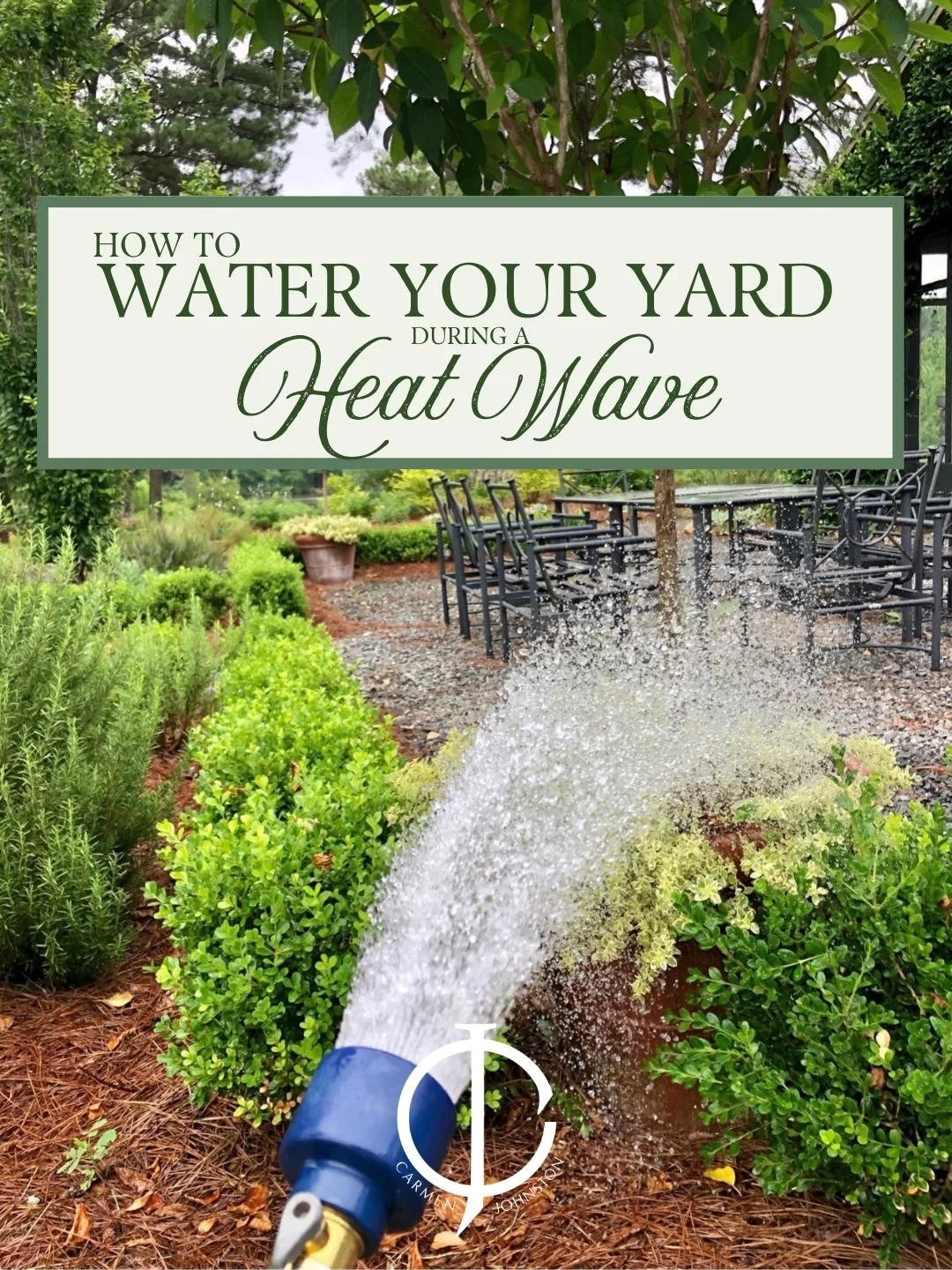
When the heat settles in and rain becomes unpredictable, watering the right way makes all the difference. It is not just about how often you water, it is about how well you water. A thoughtful approach can keep your landscape healthy, resilient, and beautiful, even during dry stretches.
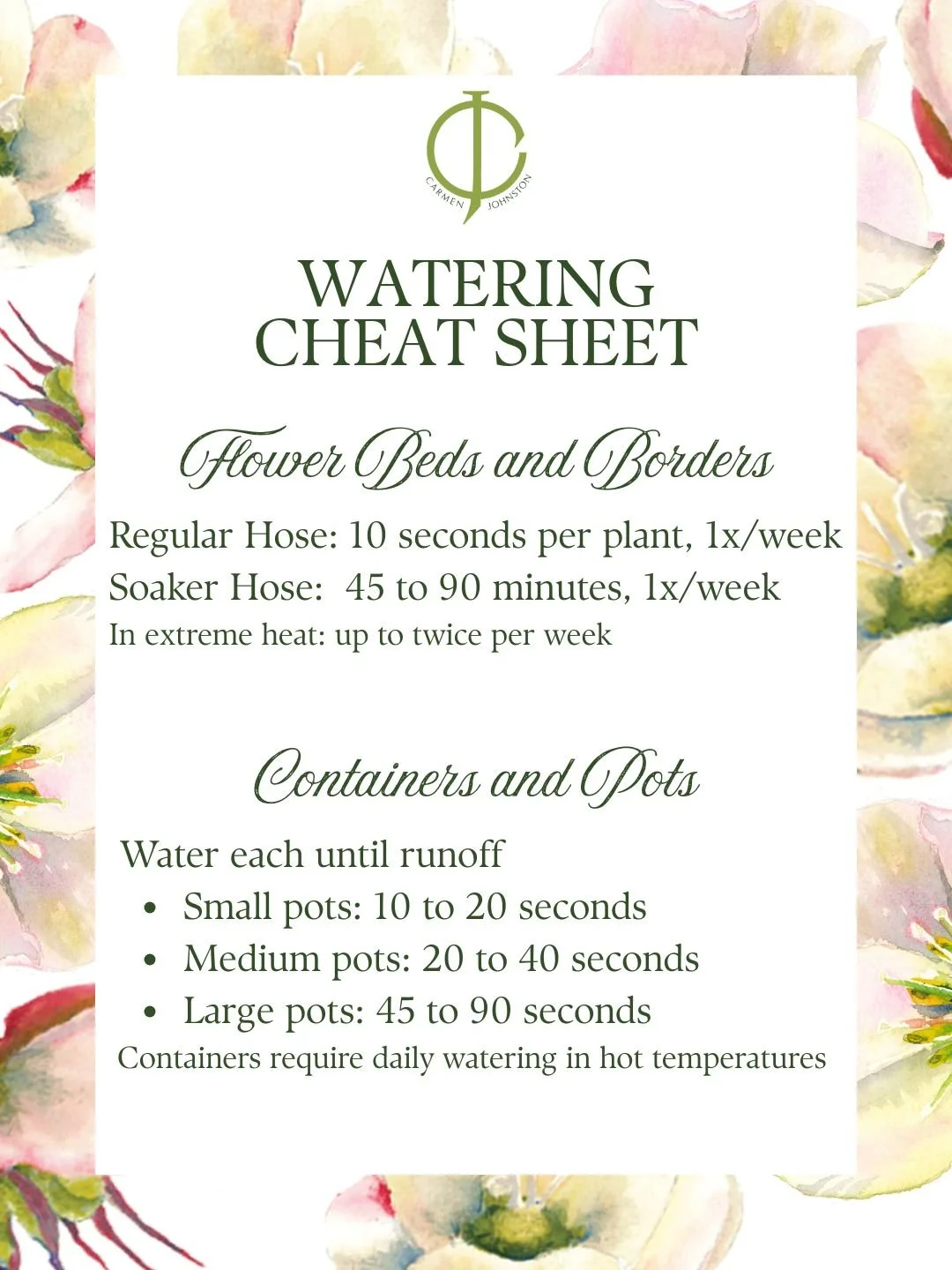
Below are ten practical, easy to follow tips to help you water wisely during times of drought. And be sure to keep reading for simple Watering Cheat Sheets that make it easy to remember exactly what your plants need!
1. Always Water Deeply
Instead of watering a little every day, focus on longer, deeper watering a few times a week.
For most plants, this looks like:
Watering 2 to 3 times per week, long enough for the soil to soak deeply rather than just wetting the surface leaves.
Deep watering encourages stronger roots and helps plants handle heat much better. Read on for lengths of time to water each area!
2. Invest in Good Lawn Sprinklers
Lawns need less water than most people think, but during long stretches without rain, the goal shifts from keeping it lush to simply keeping it alive.
During dry periods, a consistent watering routine will help your lawn survive the stress of heat and drought.
Spray systems: 15 to 20 minutes, 2-3 times per week
Rotor systems: 45 to 60 minutes, twice per week
Pay attention to how your lawn looks and feels. If the color starts to dull or footprints linger after you walk across it, it is time to water. When temperatures reach the 90s and above, your lawn will need extra support. Plan to increase watering to reach about 1.5 inches per week, adjusting based on humidity levels. Lower humidity means water evaporates more quickly, so you may need to water slightly longer or add an extra day to keep your lawn from going dormant.
EASY TIP: Many gardeners put an empty tuna can out in the grass while a sprinkler is running. When the can fills to the top, you have reached about 1 to 1.5 inches of water. It is a simple way to know your lawn is getting exactly what it needs, without any guesswork.
These Tripod Sprinklers work well if you don’t have a sprinkler system.
3. Shrubs Need Slow, Deep Watering
Shrubs benefit from slower watering that soaks down to the roots.
Hose watering: 1 to 2 minutes per shrub, two to four times per week
Soaker hose: 60 to 90 minutes, two to four times per week
The goal is not speed, it is depth. Let the water soak in gradually.
4. Trees Need Even More Time
Trees require deeper watering than anything else in your landscape.
Hose watering: 2 to 4 minutes per tree, two to three times per week
Soaker hose: 1 to 2 hours, two to three times per week
A slow soak around the root zone helps trees stay strong during dry weather.
5. Soaker Hoses Make Watering Easy
Soaker hoses are one of the most efficient ways to water beds and shrubs.
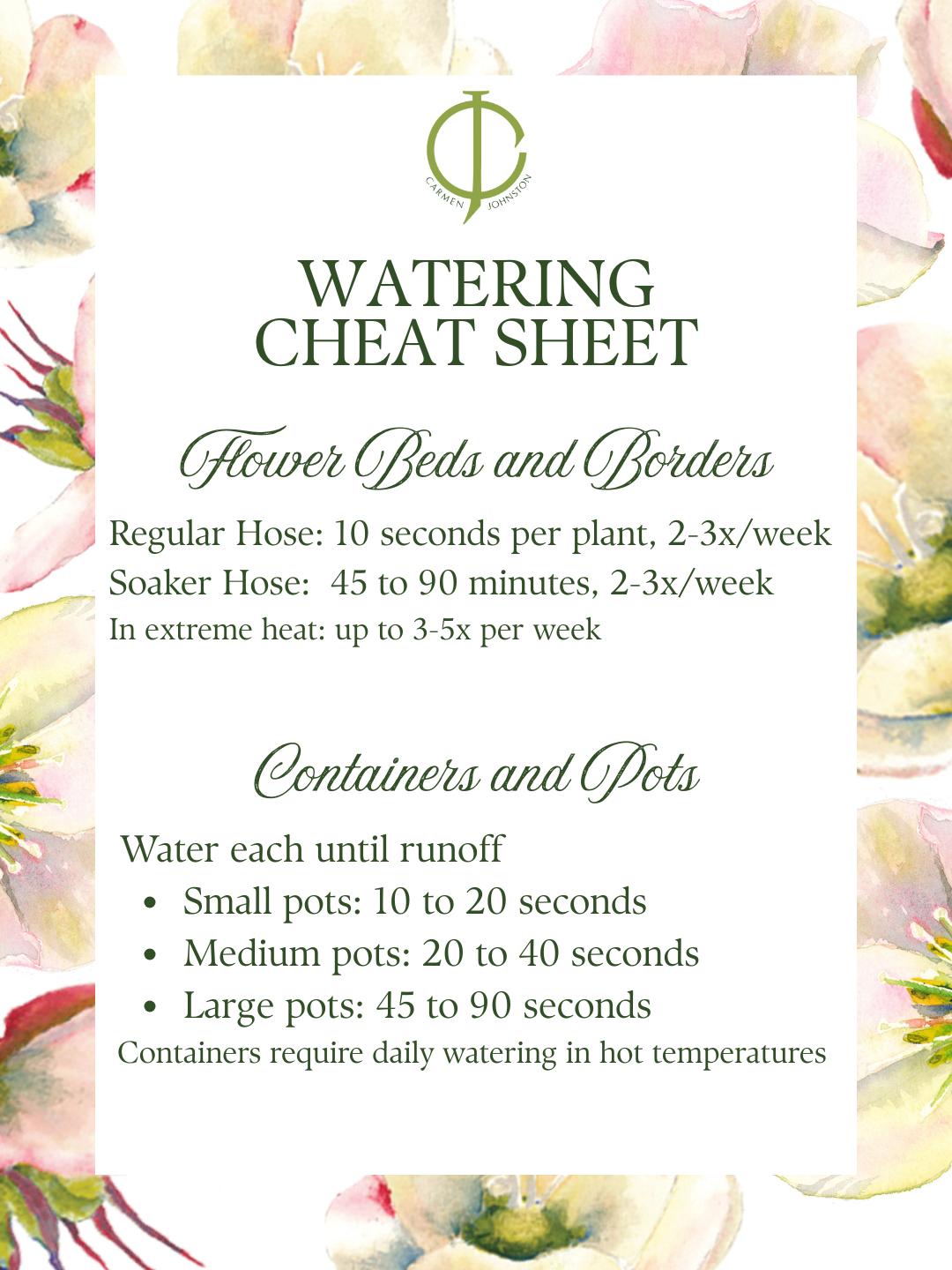
Run time: 45 to 90 minutes, two to three times per week
In extreme heat: up to four to five times per week
Lay the hose around the plant, keeping it a few inches away from stems, and let it slowly do the work.
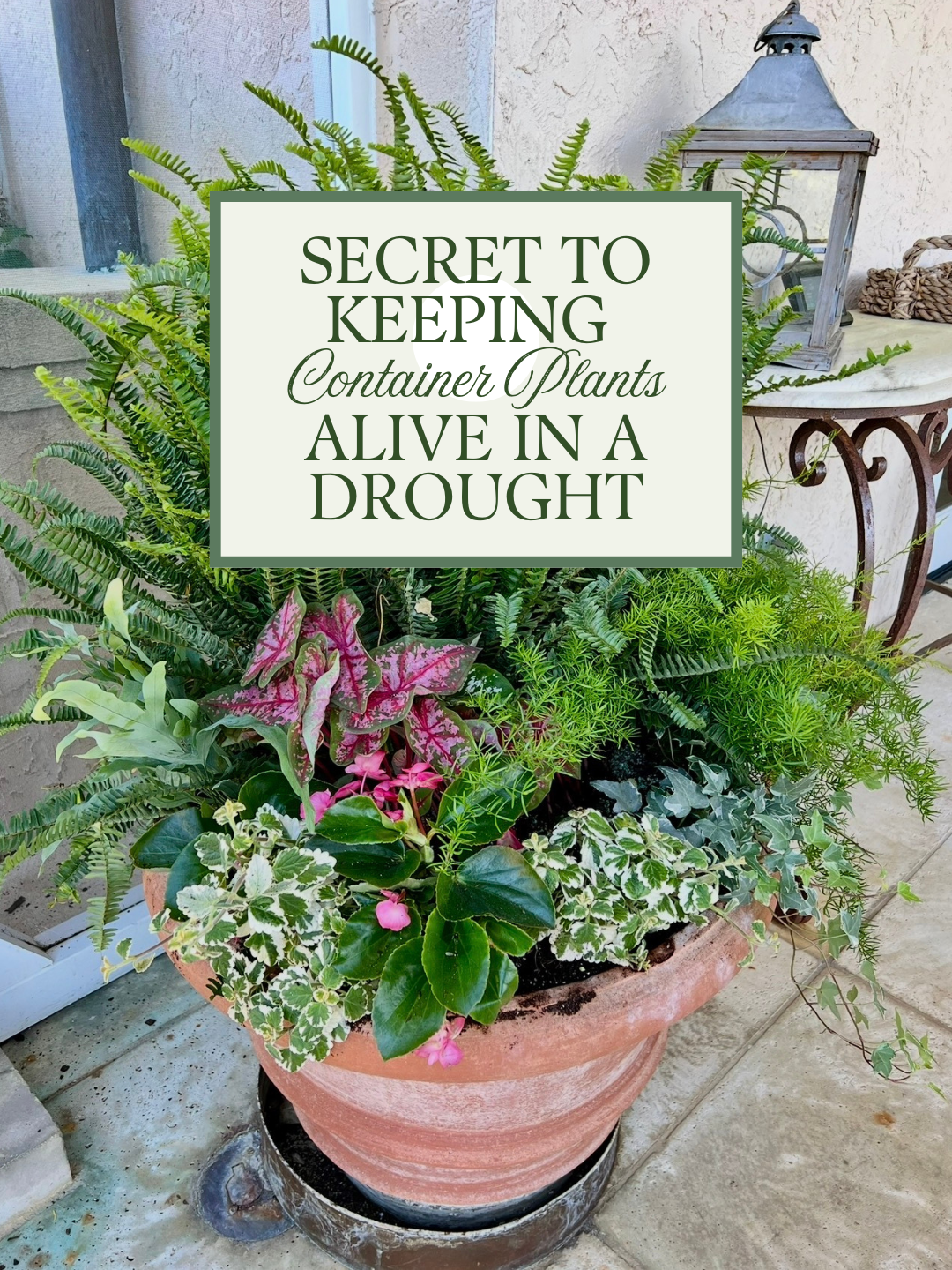
6. Containers Need Daily Attention
Pots dry out quickly, especially in summer.
Small pots: 10 to 20 seconds
Medium pots: 20 to 40 seconds
Large pots: 45 to 90 seconds
Water each container until you see water draining out the bottom for a few seconds. In hot weather, this usually means watering every day, sometimes twice.
7. Hand Watering the Right Way
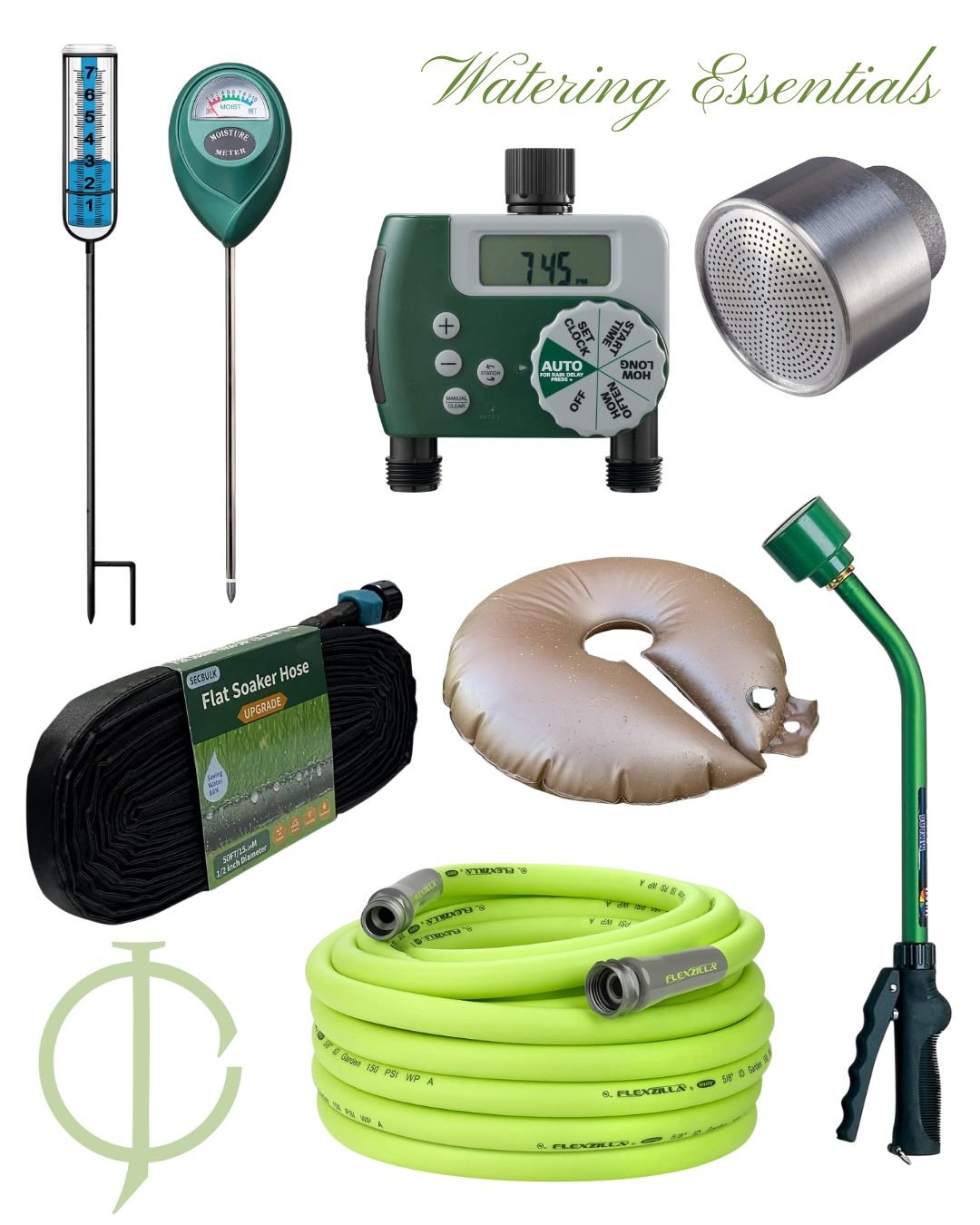
When using a hose, always use a gentle spray and take your time. I love to use this Dramm Watering Wand to get a nice shower that doesn’t blast tender plants.
Place the head down near the base of the plant and let it soak the soil completely. Do NOT just water the leaves. The cannot absorb water like the roots will. Quick watering leads to runoff. Slower watering allows moisture to soak in where it is actually needed. Low and slow is best.
8. Drip Irrigation for Consistency
Drip irrigation around your plants in flower beds delivers water right to the root zone.
Run time: 20 to 45 minutes per session
Frequency: every 1 to 2 days in hot weather
This method keeps soil evenly moist without overwatering.
9. Water Early in the Morning
The best time to water is between 5 AM and 9 AM.
Morning watering reduces evaporation and gives plants time to dry out during the day, which helps prevent disease.
If you're wondering “Can I water my plants at night?”, be sure to read this article.
10. Mulch and Prioritize What Matters Most
Adding 2 to 3 inches of mulch helps hold moisture in the soil and reduces how often you need to water.
If you need to prioritize, water in this order:
New plantings of any kind, containers, vegetables and annuals, perennials and shrubs, then lawns last.
Quick Watering Cheat Sheet
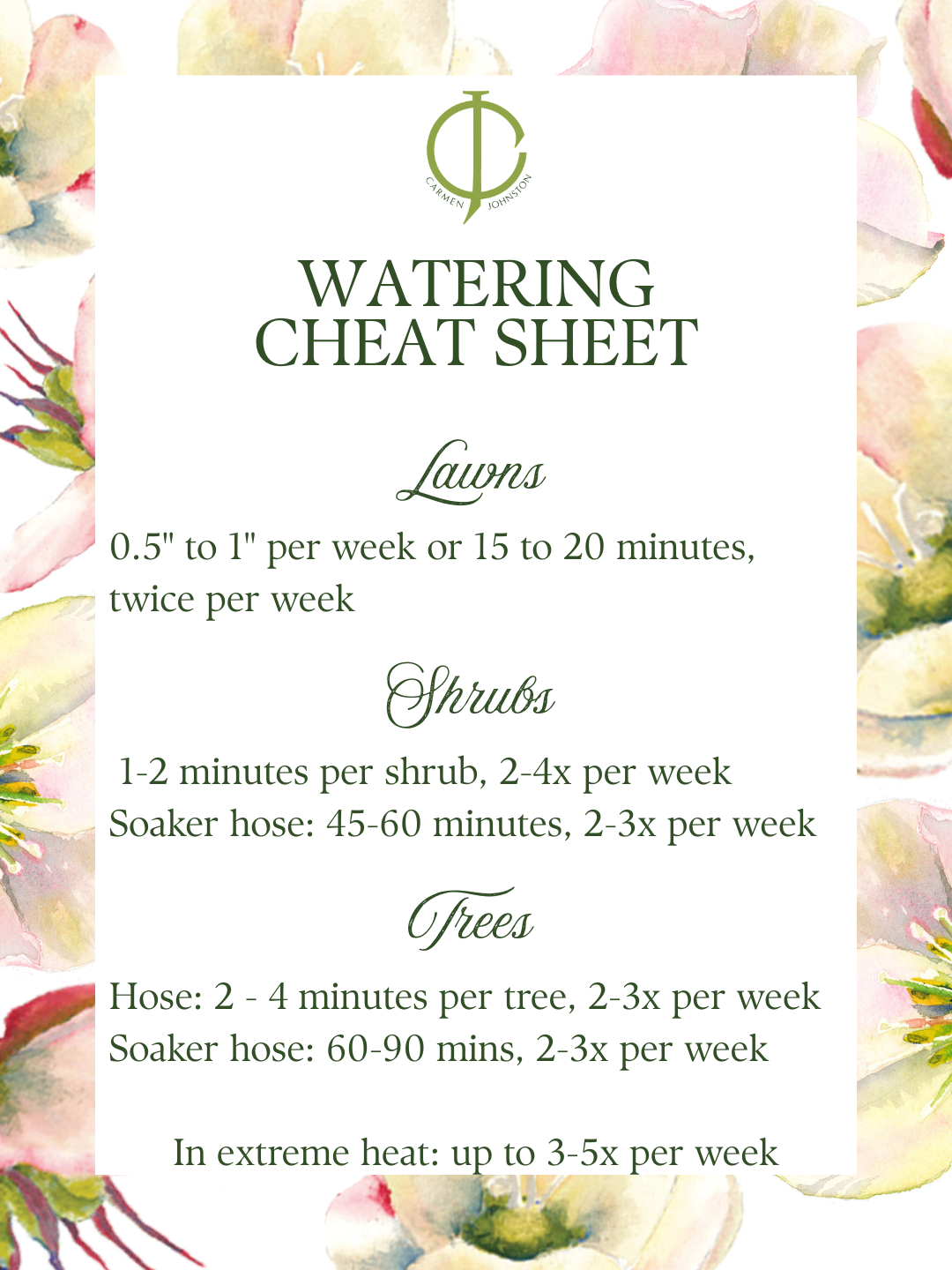
Lawns: 15 to 20 minutes (spray) or 45 to 60 minutes (rotor), two to three times per week
Shrubs: 1 to 2 minutes per plant or 60 to 90 minutes with soaker hose, two to four times per week
Trees: 2 to 4 minutes per tree or 1 to 2 hours with soaker hose, two to three times per week
Soaker hose beds: 45 to 90 minutes, two to three times per week
Drip irrigation: 20 to 45 minutes, every 1 to 2 days
Containers: 10 to 90 seconds depending on size, typically daily, sometimes twice per day in extreme heat.
Quick Watering Cheat Sheets
Read More Watering Tips Here:

related content you may enjoy!



Shop my Amazon Favorites!
Shop my Amazon storefront for chic + practical finds to pretty up your home inside and out! Every pick is personally bought and tested by me—no false advertising, just fabulous finds you can trust!