Prepare your home & PROTECT YOUR PLANTS before a hard freeze
A hard freeze is on the way for much of the Southeast US, and as southern gardeners, we know that a hard freeze can do some serious damage to our precious landscaping (and our curb appeal!) Now is the time to prepare before the storm arrives. During an ice store, power could be out for days (even weeks in some places), so Tommy has assembled an emergency checklist to prepare now in case the power is out during an ice storm. Click here to read Tommy’s Tips on Power Outages!
If you’re worried about how to keep the frost, snow and ice from killing your plants, shrubs and other landscaping, here’s how to protect your garden and give them a chance of survival.
An ice storm can be rough on plants, but a few proactive steps can greatly reduce damage. Here’s how to protect your plants before, during, and after an ice storm:
how to Prepare Before the Ice Storm arrives
1. Water the ground (if not frozen yet)- Moist soil holds heat better than dry soil and can help protect roots. DO NOT WATER THE FOLIAGE, focus on the roots only. I like to use a Soaker Hose for this!
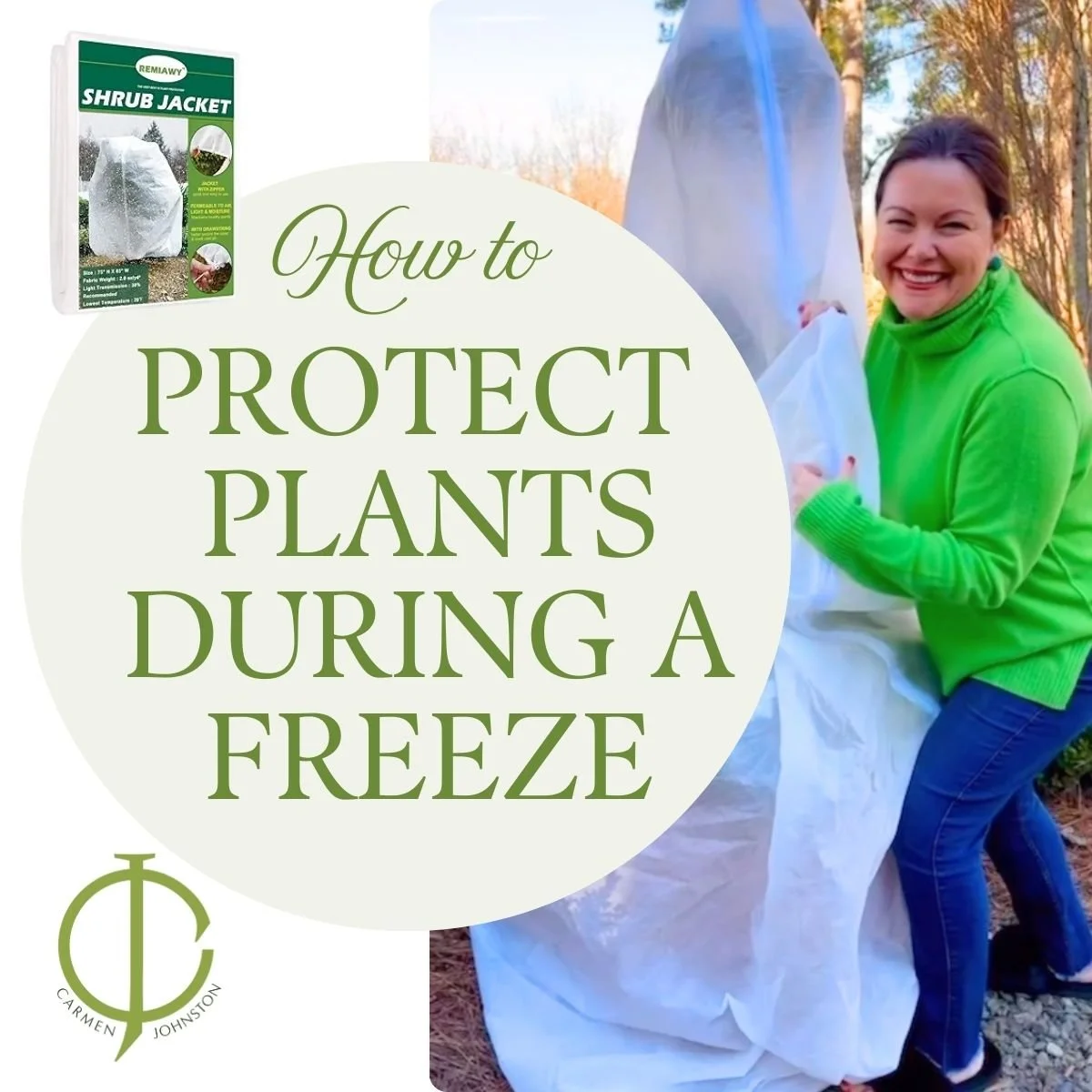
2. Cover vulnerable plants
• Use frost cloths, burlap, old sheets, or plant row covers to protect landscaping
• Avoid plastic directly on plants (it traps moisture and worsens freeze damage)
• Drape covers to the ground to trap heat, and secure them well. Use stakes to support weight if expecting heavy snow
Be sure to remove the frost cloths after the weather warms back up.
3. Stake young trees and shrubs. Ice adds weight and wind stress. Staking prevents snapping or uprooting.
4. Mulch generously
• Apply 2–4 inches of mulch around the base (keep it off the trunk)
• Mulch insulates roots and reduces freeze–thaw stress
5. Move container plants indoors if possible
• Bring them indoors, into a basement/garage, or group together against a protected wall
• Elevate pots off frozen ground if possible
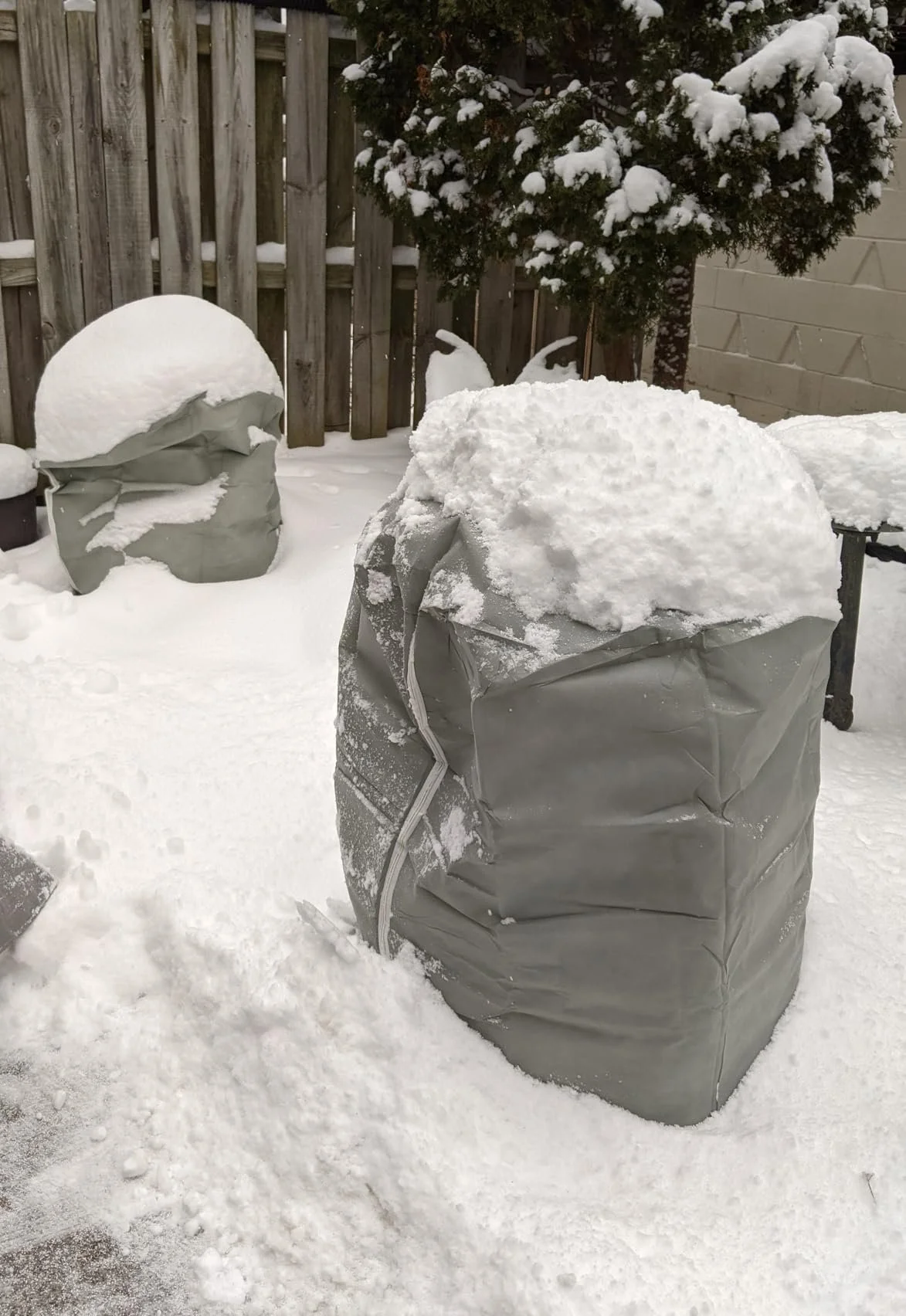
Tip for containers that are too heavy to move
For extra-large containers that are too heavy to lift, I like to use these insulated Flower Pot Protection Bags to protect the roots from freezing.
This photo was taken by an Amazon reviewer named Christina.
As you can see, these bags can handle snow!
During the Ice Storm
1. Do not shake ice off branches
Ice-covered branches are brittle—shaking often causes breakage.
2. Keep covers in place
Even if ice forms on top, the layer underneath can remain warmer.
After the Ice Storm
1. Let ice melt naturally. Avoid knocking it off; melting causes less structural damage.
2. Inspect for damage once thawed
• Look for cracked, split, or broken branches
• Delay pruning until temperatures stabilize (unless branches are dangerous)
3. Prune carefully
• Remove only clearly dead or broken limbs at first
• Clean cuts help prevent disease
4. Water once soil thaws to help plants recover from freeze stress.
Extra Tips by Plant Type
• Evergreens: Tie branches gently upward before storms to reduce splaying
• Fruit trees: Young trees benefit most from trunk wraps and mulching
• Perennials: Most survive fine underground if mulched well
What is actually happening in the plant during freezing weather
When temperatures drop well below freezing, we often hear, “Is this cold going to hurt my landscaping plants?” The answer is not always about how cold it gets. It is about how fast temperatures change, what stage the plant is in, and whether it has had time to acclimate.
If you love to understand more about horticulture care during freezing weather, DOWNLOAD THE EFFECTS OF LOW TEMPERATURE ON PLANTS GUIDE from the University of Georgia Extension here.
Cold damage does not only happen when temperatures fall below freezing. Many plants (especially tropicals, subtropicals, and newly planted trees & shrubs) can experience chilling injury well above 32 degrees. This type of stress disrupts normal plant processes like water movement, photosynthesis, and nutrient uptake, and the effects often do not show up until weeks later.
When temperatures drop quickly, plant cells cannot adjust fast enough. Roots slow down, leaves lose efficiency, and tissues become more vulnerable to injury. Containers are especially at risk because roots are exposed to colder air temperatures than plants growing in the ground.
Plants that tend to feel the cold first
• Tropical and subtropical plants
• Newly installed trees and shrubs
• Actively growing plants
• Container grown plants
One of the most important horticultural principles to remember is this:
Plants handle STEADY cold far better than sudden temperature drops. Our goal in winter is not to keep plants warm. The goal is to slow the rate of freezing and protect the root system.
Plan Ahead for Next Year
Once spring arrives, take notes on what worked well and what didn’t. A little planning now will make next winter’s prep easier and even more effective. Store your cold-weather garden essentials in heavy-duty totes (I store my frost cloths in these heavy-duty storage bags with labels so I know where to find them for next year.)
Every bit of effort you put in now—mulching, covering, or moving plants—pays off when everything bursts back to life in the warmer months.
Here are my favorite items to protect my Home & Garden all winter long
Don’t let the cold catch your plants off guard. Here are the essential gardening tools you’ll need to protect them: frost cloths, hose bibb covers, and a good watering system (hydration is key!). Let’s keep your garden safe and thriving all season long.
Shrub Jackets
Insulated Flower Pot Protection Bags for containers
TIPS FROM TOMMY:
How to protect your Home during a hard freeze
& Get prepared for power outages
Click here to read
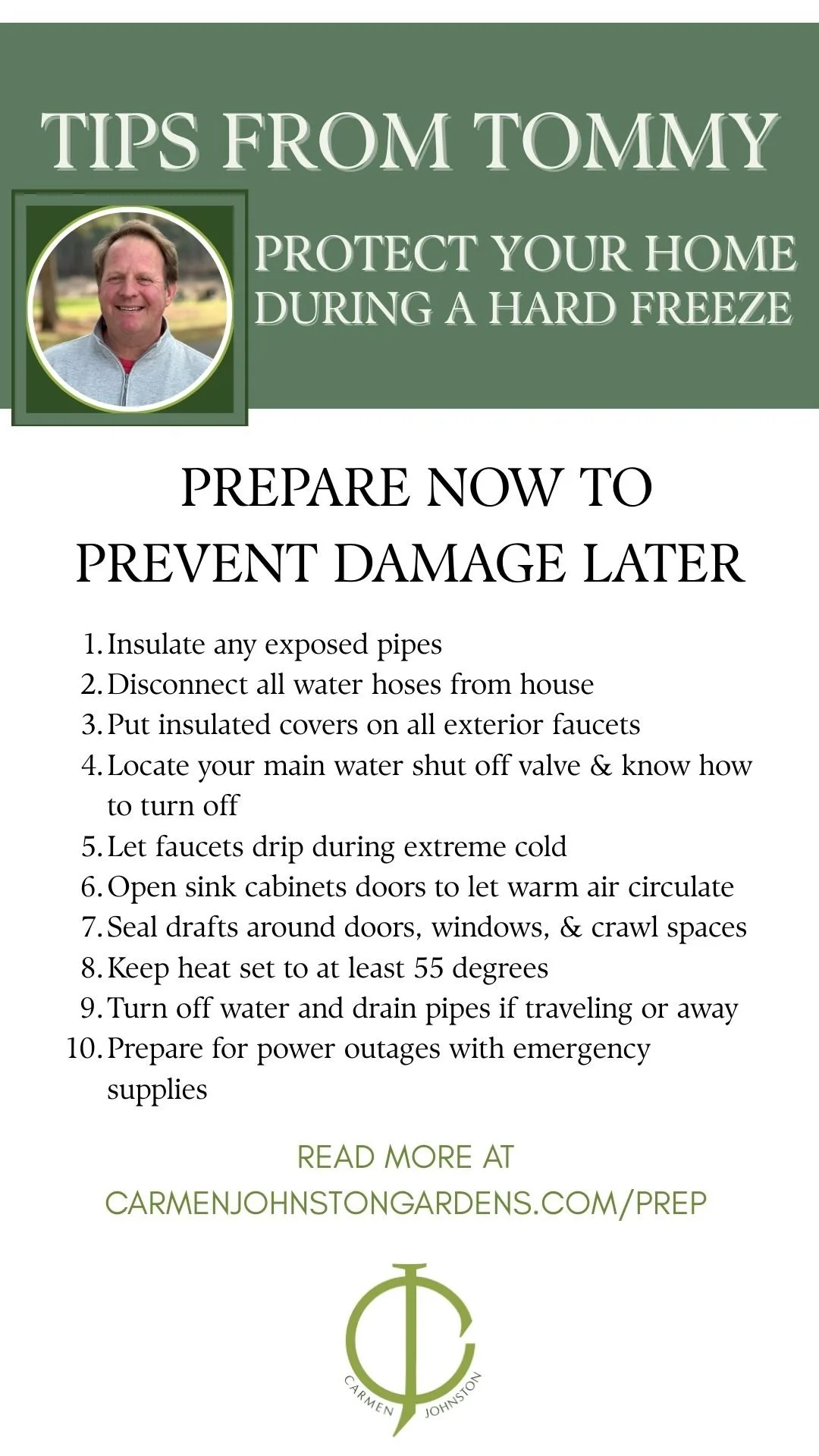
Tips from Tommy:
How to Prepare your Home for a Hard Freeze
Taking a little time now to prepare can help protect your home, your family, and your peace of mind during severe winter weather. Hard freezes are unpredictable, but being prepared puts you one step ahead and makes all the difference when temperatures drop.