
Emergency Preparedness Checklist for Winter Power Outage
When a hard freeze is in the forecast, a little preparation can make all the difference. In the South, we do not always get much warning, and our homes are not built to handle long stretches of extreme cold the way northern homes are. That is why it is so important to take a few simple steps ahead of time to protect your pipes, keep your family comfortable, and be ready if the power goes out.
Over the years, we have learned that frozen pipes and power outages can cause far more damage than the cold itself. A little planning now can save you from expensive repairs, stress, and unnecessary scrambling later. Whether you are staying home or planning to travel during winter weather, having a plan in place gives you peace of mind.
Below you will find practical tips to help protect your home during a hard freeze, along with an emergency preparedness checklist you can download and keep on hand. I have also linked some of my favorite supplies that make preparing easier and more affordable.
DOWNLOAD YOUR FREE EMERGENCY SUPPLY CHECKLIST NOW
To make things simple, I put together a comprehensive emergency preparedness checklist you can download for free. This checklist covers everything from lighting and power to food, warmth, and household essentials, so you are not trying to remember it all when the weather turns bad.
You can print it, keep it on your phone, or tuck it into a kitchen drawer so it is easy to grab when you need it.
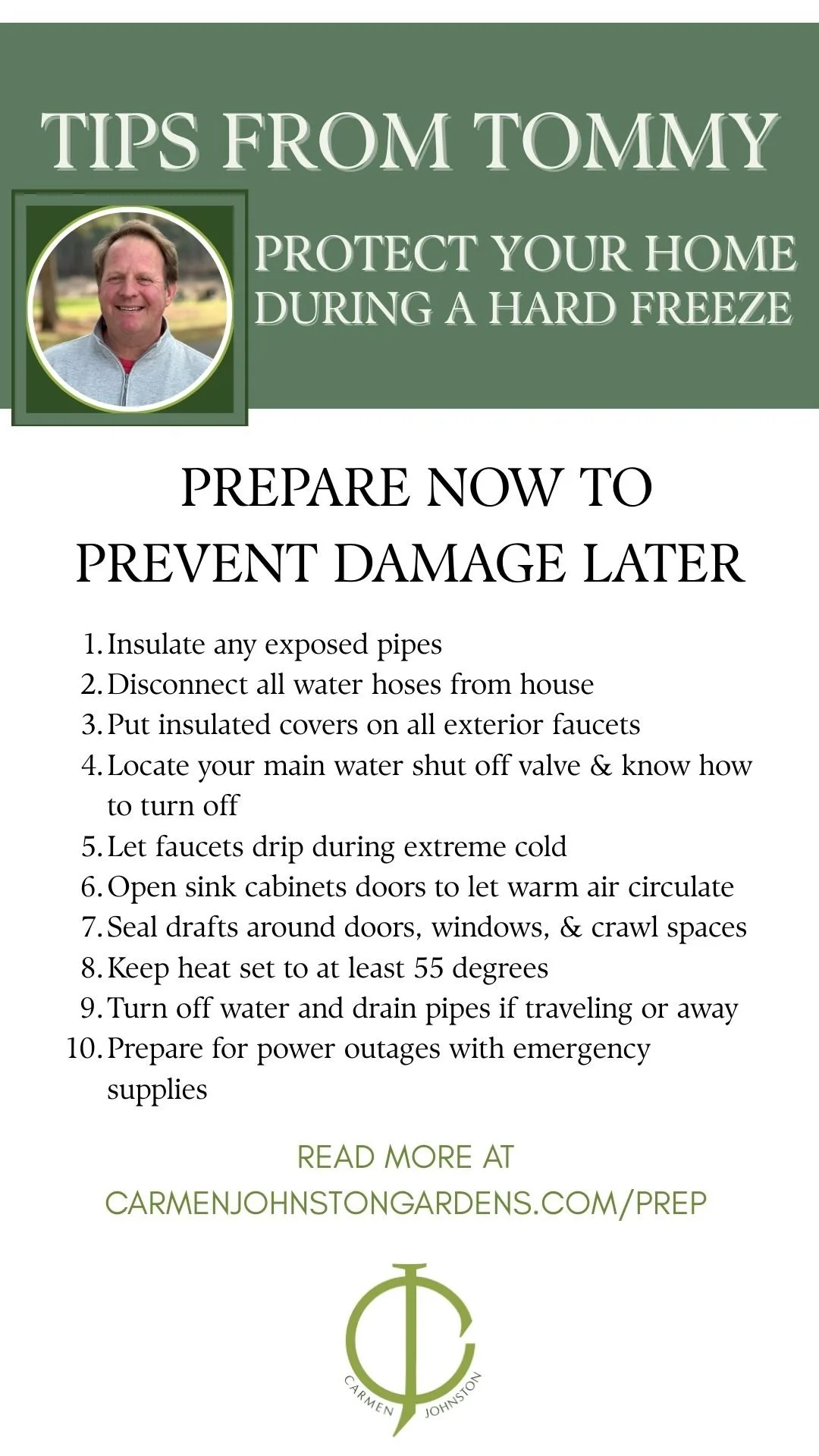
TIPS FROM TOMMY:
Protect Your Pipes
Insulate exposed pipes in crawl spaces, garages, attics, and along exterior walls. Cover all outdoor hose bibs with insulated faucet covers and disconnect hoses so water is not trapped and frozen. Faucet covers are inexpensive, easy to find at stores like Walmart, Home Depot, and Lowe’s, and they work well all winter. These are my favorite Insulated Faucet Covers that work really well all winter long.
Know Your Water Shut Off Valve
Locate your main water shut off valve now so you can act quickly if a pipe bursts. Quick response can significantly reduce water damage.
NOTE: If you are not living in the home or are on vacation, it may benefit you to turn the water off at the main and drain all the pipes during winter. To do this, first open a few indoor and outdoor faucets and allow the water to run. Then, locate the water main (usually a black box in the ground near the road or driveway entrance) and turn it off until water stops flowing completely. Sometimes a special tool is required, but usually you can just twist the knob and turn it off. Be careful when turning the water back on, by leaving a faucet open and running, so pressure does not build up and damage a pipe when the water returns.
Keep Water Moving
On especially cold nights, allow faucets to drip slightly. Moving water is less likely to freeze and can help prevent pipe bursts during prolonged cold spells.
Let Warm Air Reach Your Pipes
Open cabinet doors under kitchen and bathroom sinks, especially those located on exterior walls. This allows warm indoor air to circulate around plumbing and helps prevent freezing.
Seal Out Cold Air
Check doors, windows, crawl space vents, and garage areas for drafts. Use weather stripping, door sweeps, or temporary draft blockers to keep cold air from reaching pipes inside walls.
Maintain Heat Inside the Home
Even if you are away, keep your thermostat set no lower than 55 degrees. Consistent heat is one of the best protections against frozen pipes.
Prepare for Power Outages
Freezing weather often brings power interruptions because the weight of ice can easily break tree limbs that can fall onto power lines. This happens more often in the South, since we don’t typically have snow and ice annually, and our trees are not used to bearing the weight of ice. Have flashlights, batteries, blankets, canned food that doesn’t require electricity to cook (be sure you have a manual can opener!) and emergency supplies ready just in case. Here’s my list of Emergency Preparedness Supplies.
Taking these simple steps ahead of time can protect your home, save money, and give you peace of mind during severe winter weather.
To make things simple, I put together a comprehensive emergency preparedness checklist you can download for free. This checklist covers everything from lighting and power to food, warmth, and household essentials, so you are not trying to remember it all when the weather turns bad.
You can print it, keep it on your phone, or tuck it into a kitchen drawer so it is easy to grab when you need it.
CLICK HERE TO DOWNLOAD FREE PRINTABLE EMERGENCY CHECKLIST (OR CLICK PHOTO BELOW)
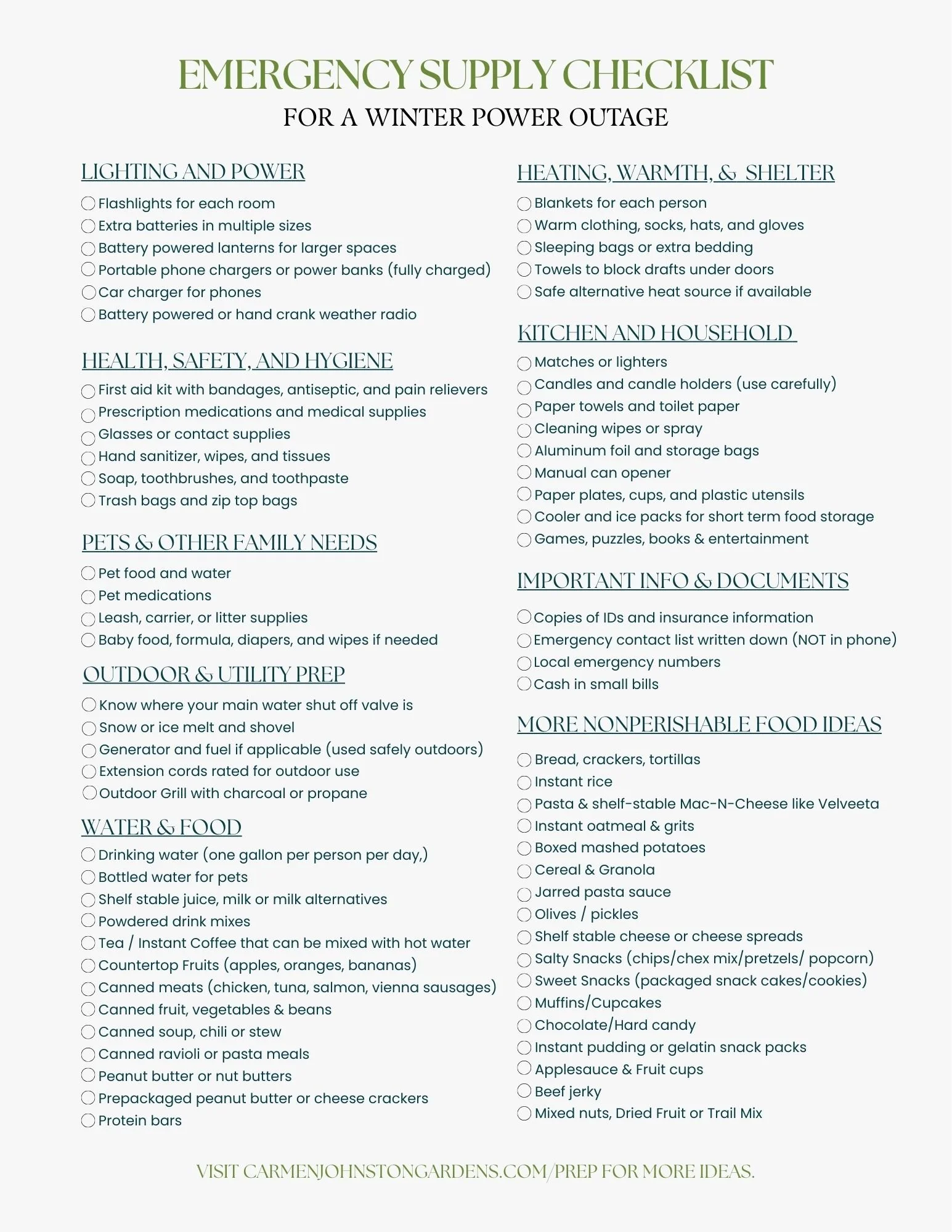

I have also included links to a few of my go to emergency supplies that we always keep on hand at home. These are items that are easy to store, affordable, and genuinely helpful during extended power outages or winter storms.
Taking a little time now to prepare can help protect your home, your family, and your peace of mind during severe winter weather. Hard freezes are unpredictable, but being prepared puts you one step ahead and makes all the difference when temperatures drop.
Stay warm, stay safe, and do not wait until the power is out to wish you had been ready. - TOMMY