CARMEN’S CHRISTMAS CACTUS CARE
Christmas cactus are one of my favorite winter-blooming house plants, and there is a good reason they are one of the most popular holiday plants. With the right care, these beautiful plants can bloom year after year and become a true family keepsake. Today, I’m sharing all the secrets to getting a Christmas cactus to bloom at Christmas time and beyond, plus a cautionary tale from Tommy about what NOT to do so you don’t kill your Christmas cactus!

How to Care for
a Christmas Cactus
(so it blooms all winter!)
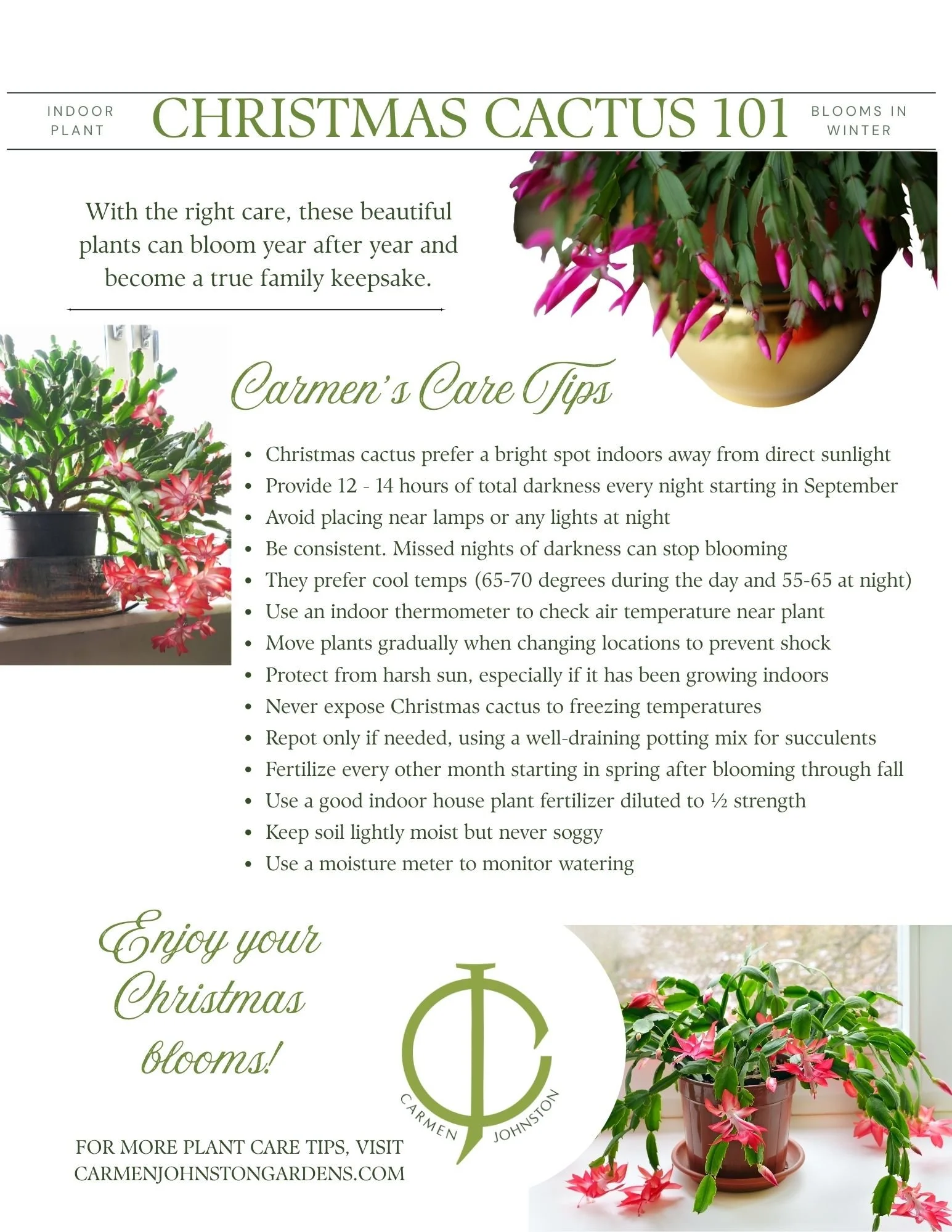
Christmas cactus prefer a bright spot indoors away from direct sunlight
Provide 12 - 14 hours of total darkness every night starting in September
Avoid placing near lamps or any lights at night
Be consistent. Missed nights of darkness can stop blooming
They prefer cool temps (65-70 degrees during the day and 55-65 at night)
Use an indoor thermometer to check air temperature near plant. You might be surprised how warm it can be if it’s near a sunny window or heat vent.
Move plants gradually when changing locations to prevent shock
Protect from harsh sun, especially if it has been growing indoors
Never expose Christmas cactus to freezing temperatures
Repot only if needed, using a good succulent potting soil mix for succulents
Fertilize every other month starting in spring after blooming through fall
Use a good indoor house plant fertilizer diluted to ½ strength
Use a moisture meter to monitor watering and soil moisture
Keep soil lightly moist but never soggy
Enjoy your Christmas blooms!
Our Christmas Cactus Journey
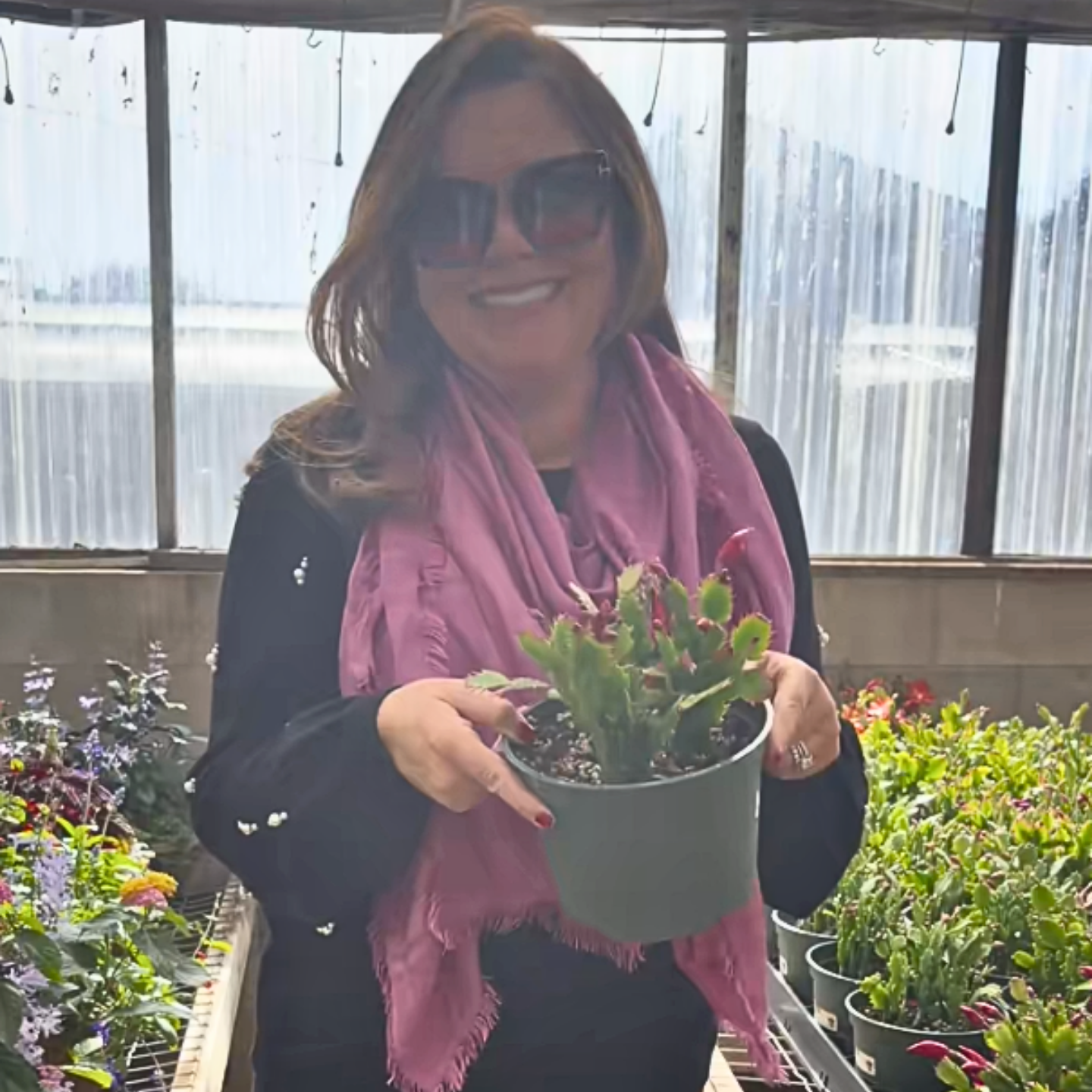
Christmas cactus are everywhere right now, from grocery stores to garden centers. This particular plant in the photo above belongs to my mother-in-law and was given to her by her friend Deanne three years ago. It has incredible bloom power, and it has become the perfect example of how a Christmas cactus can thrive with just a little attention. So what is the real secret to getting a Christmas cactus to bloom?
First, you have to put your plant to sleep.
Christmas cactus need 12 to 14 hours of complete darkness every single day. That part is essential. Complete darkness means no lamps, no overhead lights, and no glowing kitchen at night. If your plant is exposed to light in the evenings, it will not bloom. You may need to move it to a dark room or even a closet each night, and this needs to start in September and happen consistently.
This is the number one reason people ask why their Christmas cactus is not blooming. It likely is not getting enough darkness.
Temperature also plays a big role.
My mother-in-law moves her Christmas cactus to a covered porch in the fall so it can enjoy cooler evenings, usually in the 50 degree range. Not colder than that, but just enough to signal a seasonal change. We truly believe this is one reason her plant blooms so beautifully year after year.
If you live in the South, this can work well. If you live up north and are dealing with freezing temperatures, keep your plant indoors. Freezing temps can quickly damage a Christmas cactus. Indoors, these plants prefer cooler nights, ideally between 65 and 70 degrees.
Now let me share Tommy’s story, because it is the perfect example of what not to do.
Tommy had a Christmas cactus in his office for over six years. It was healthy, happy, and required very little care. One afternoon, he set it outside for fresh air, but it was a bright, sunny day and the plant had been living indoors. The sun stressed it badly, and then it stayed outside that night and was exposed to cold temperatures. That double shock was too much, and the plant did not recover.
Christmas cactus are tougher than they look, but sudden changes can do real damage. Always ease them into new conditions and be mindful of sun and temperature.
If you want your Christmas cactus to bloom for the holidays, start in September with consistent darkness and pair that with cooler nighttime temperatures. With just a little care and consistency, these plants can bloom year after year.
They also make wonderful last minute gifts. They are easy to care for, beautiful, and long lasting when treated correctly. Just be sure to pass along the care tips so they can be enjoyed for many seasons to come.
A little darkness, a little cool air, and a lot of consistency truly go a long way with a Christmas cactus.
Christmas Cactus Care FAQs
How often should I water a Christmas cactus?
Water when the top inch of soil feels dry. Christmas cactus prefer evenly moist soil but do not tolerate soggy roots. Always allow excess water to drain.
What kind of light does a Christmas cactus need?
Bright, indirect light is best. Too much direct sunlight can scorch the leaves, while very low light can reduce blooming.
What temperature does a Christmas cactus prefer?
They grow best in temperatures between 60 and 70 degrees. Avoid placing them near heat vents, fireplaces, or cold drafts.
Does a Christmas cactus need darkness to bloom?
Yes. Christmas cactus are short day plants and require long nights to set buds. Typically, 12 to 14 hours of uninterrupted darkness each night for several weeks encourages blooming.
When should I start encouraging blooms?
Begin the darkness period in early fall, usually late September or October, to encourage blooms for the holiday season.
Can I put my Christmas cactus outside?
Yes, in mild climates. Place it in a shaded, protected area where temperatures stay above 50 degrees. Bring it indoors if temperatures drop or frost is expected.
What type of soil is best for Christmas cactus?
Use a well draining potting mix, often a blend made for houseplants or cacti with added organic matter. Good drainage is essential.
Do Christmas cactus need fertilizer?
Fertilize lightly during the growing season, spring through early fall, using a balanced houseplant fertilizer. Stop fertilizing once buds begin to form.
Why are the buds falling off my Christmas cactus?
Bud drop is often caused by sudden temperature changes, inconsistent watering, low humidity, or moving the plant while buds are forming.
Should I prune my Christmas cactus?
Pruning is optional but can help encourage a fuller plant. Light pruning after flowering can promote branching.
How long do Christmas cactus live?
With proper care, Christmas cactus can live for many decades and are often passed down through generations.
Are Christmas cactus toxic to pets?
Christmas cactus are considered non toxic to cats and dogs, making them a pet friendly houseplant.
DOWNLOAD the christmas cactus 101 guide

Shop my Amazon Favorites!
Shop my Amazon storefront for chic + practical finds to pretty up your home inside and out! Every pick is personally bought and tested by me—no false advertising, just fabulous finds you can trust!