Ask Carmen: Garden Planning FAQs
As we head into a new year, I always start itching to plan my spring gardens. I know many of you are feeling that same pull to get your hands back in the dirt, even though winter is asking us to be patient just a little longer. I get so many great questions in my inbox this time of year, and I wanted to take a moment to answer them while we are all in planning mode. I thought it would be helpful to gather everything in one place so everyone can learn and be inspired together.
If you have sent me a question recently that I did not get to (I am SO sorry!) please email me I will do my best to answer it here. In the meantime, here are some of your most common garden planning questions to get those brainstorms flowing and garden plans growing!!
XOXO,
Carmen
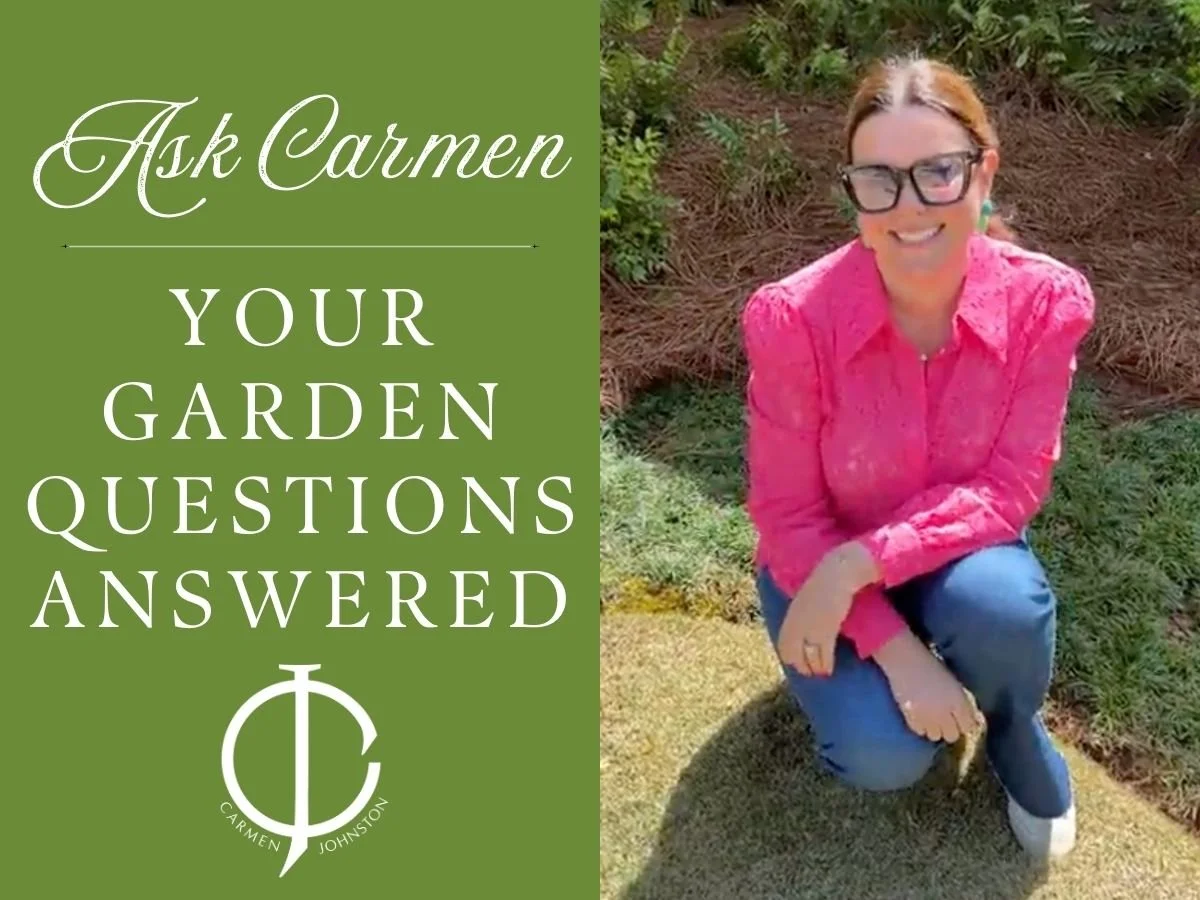
FAQS: Your GARDENING Questions + ANswers from Carmen

Q: Can I grow peonies in South Alabama?
A: Peonies are one of those plants we all fall in love with, and I completely understand wanting to try them. The truth is, peonies are a challenge in South Alabama because they need a good amount of winter chill to bloom well. That said, it is not impossible if you go in with realistic expectations. Look for varieties labeled as low chill or early blooming, and plant them where they will get full sun in the morning with a little protection from intense afternoon heat. Good drainage is essential, and they do best when planted a bit higher than surrounding soil. Even with the right care, blooming can be inconsistent, but when you do get flowers, they are such a treat. I always say if you love peonies, they are worth experimenting with, just do not make them the star of your garden plan.
Q: Can I grow blueberry bushes in Zone 8A - 9B?
Blueberries are a wonderful choice for South Alabama and much more reliable. They love our climate as long as you give them what they need. The most important thing to know is that blueberries require acidic soil, so a soil test is a great place to start. Choose Southern highbush or rabbiteye varieties, which perform best in our region. Plant at least two different varieties for good pollination and better fruit production. Full sun, consistent moisture, and plenty of organic matter will set them up for success. Not only do they produce delicious fruit, but they are also beautiful shrubs with spring blooms and great fall color, which makes them a win all around.

Q: How do I keep squirrels from eating my violas without harming the plants?
A: Squirrels can be especially destructive to violas, particularly in fall and winter when they are searching for food. The good news is there are several effective ways to deter squirrels without damaging your plants. One simple and affordable option is sprinkling crushed red pepper flakes or cayenne pepper around the violas. This will not harm the plants, but squirrels dislike the smell and taste. The downside is you need to reapply after rain or watering, so it’s not a long term solution.
You can also use a commercial animal repellent that is labeled safe for ornamental plants. These repellents work through scent and taste and can be very effective when applied regularly. This All-Purpose Liquid Fence Animal Repellent Granules are your best bet!
If your violas are planted in containers, moving them closer to the house or onto a porch can sometimes solve the problem altogether. Squirrels are persistent, so using a combination of these methods usually gives the best results.

Q: What trees can I grow in a container to provide afternoon or evening shade on a porch in South Louisiana
A: If you need shade on a porch and must grow a tree in a container, you still have some great options for South Louisiana. Look for heat tolerant trees that do well in large pots, like a half barrel with good drainage. Bay laurel is one of my favorite choices because it handles our climate beautifully, stays evergreen, and can be lightly pruned to control size. Olive trees, especially fruitless varieties, are another good option and provide airy, filtered shade while thriving in heat.
You can also consider a dwarf or semi dwarf crape myrtle for seasonal shade and summer flowers, or a heat tolerant Japanese maple placed where it gets morning sun and protection from harsh afternoon heat. Just remember that container trees need consistent watering and occasional feeding, but with the right plant, a potted tree can make a porch much cooler and more comfortable.

Q: What can I use on a lanai wall to cover an outdoor outlet and add interest
A: A beautiful option for a lanai or patio wall is using a decorative wall trellis planter paired with shade loving plants. A metal or wood trellis around 30 to 36 inches wide works well to add height and texture. You can plant climbing or trailing shade tolerant plants at the base in containers, like creeping fig, pothos, philodendron, or ferns, and let them soften the wall naturally. This creates living wall art that feels relaxed and layered, and a bit tropical for a lanai.
I also love using metal wall art like pressed tin ceiling medallions or even outdoor rated rugs hung as wall tapestries. These pieces add pattern and personality, handle humidity well, and are easy to link for sourcing. Just be sure anything you choose is rated for outdoor use and mounted securely so it stays beautiful over time.

Q: Why is my sunshine ligustrum not growing and how can I help it recover?
A: Sunshine ligustrum is usually a tough, fast growing plant, so when it struggles, it is often tied to stress at the roots. From what I see most often, poor drainage, compacted soil, or inconsistent watering are the biggest culprits. Start by checking that the soil is not staying overly wet and that the plant is not planted too deeply. Sunshine ligustrum prefers full sun and well drained soil, so making sure it is getting plenty of light is also important.
I recommend lightly pruning back any dead or weak growth, refreshing the mulch without piling it against the stem, and giving it a balanced slow release fertilizer in spring. With improved drainage, consistent watering, and time to recover, ligustrum will often surprise you and bounce back stronger.

Q: Why do my boxwoods turn yellow and die, and how can I keep them green
A: Yellowing boxwoods are usually a sign of stress, most often from drainage issues, inconsistent watering, or poor air circulation. Boxwoods like evenly moist but well drained soil, and they struggle when roots stay too wet or too dry. Make sure they are planted slightly above grade, not buried too deeply, and that mulch is kept pulled back from the base. Too much shade or reflected heat can also cause yellowing over time.
To help them recover, focus on improving drainage, watering deeply but less often, and feeding lightly with a balanced slow release fertilizer in spring. I like to use TopBuxus Restore and Protect Tablets for Boxwood Health and Fertilome Tree and Shrub Drench.
Avoid heavy pruning when plants are stressed. If boxwoods continue to decline, it may be worth considering a more heat tolerant alternative that performs better in Southern gardens. I’ve listed all my favorites in my Complete Guide to Caring for Boxwoods. Check it out for more great boxwood info!
STAY TUNED NEXT MONTH FOR MORE ANSWERS TO YOUR QUESTIONS!

Shop my Amazon Favorites!
Shop my Amazon storefront for chic + practical finds to pretty up your home inside and out! Every pick is personally bought and tested by me—no false advertising, just fabulous finds you can trust!