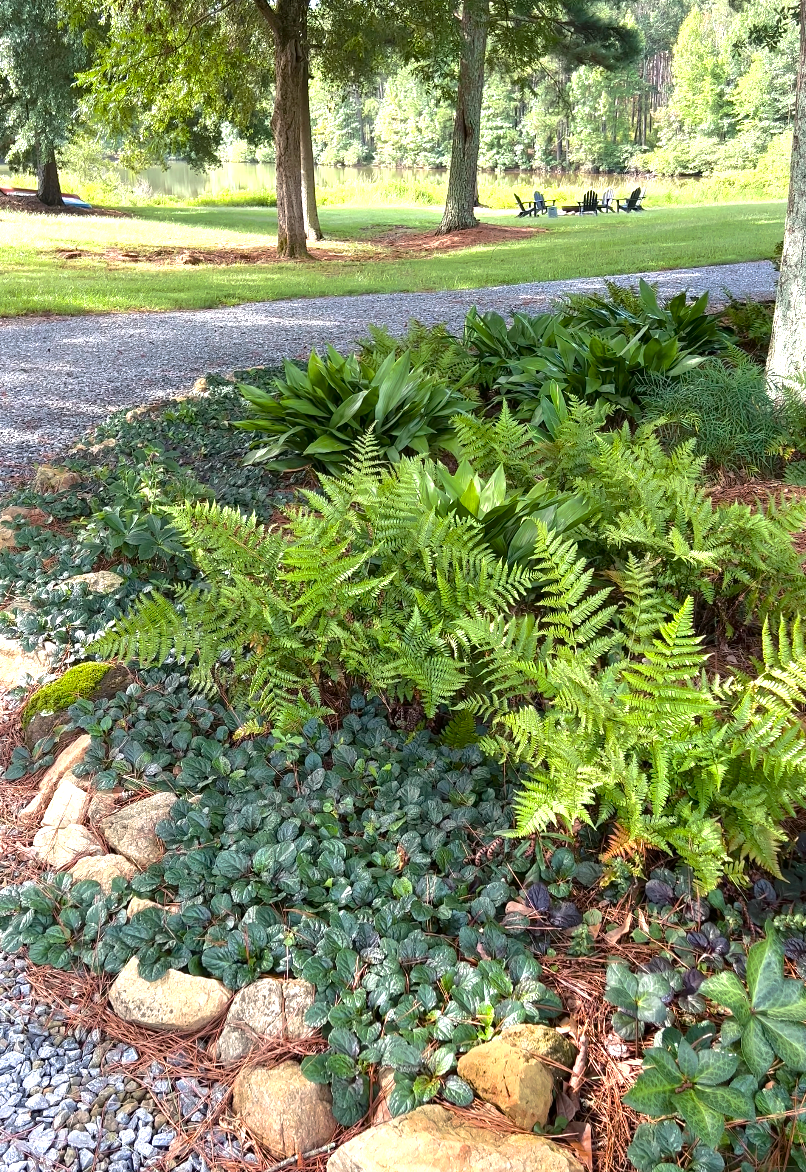
How to Find Out the Sun Exposure in Your Yard
One of the most important factors in gardening success is sunlight. When a plant tag says full sun, part sun, or part shade, it is not just a suggestion. It determines how that plant will grow, bloom, and survive. One of the biggest questions I get is “How do I know what kind of sunlight my yard gets?”
Let’s walk through this in a way that is easy to understand, but also gives you the clarity you need to make confident decisions in your own garden.

Full SUn, Part SUn, Part Shade or Full Shade? Let’s Talk about it!
When a garden has little to no tree coverage, full sun is inevitable. But how do you know what type of light your garden has if you have more tree coverage?
Understanding Sun Exposure in the Garden
How to know if my yard is in Full Sun?
Full Sun Definition:
Full sun means a plant receives at least 6 to 8 hours of direct sunlight per day.
What counts as direct sun?
The sun is shining straight onto the plant
There are no trees, buildings, or structures blocking the light
The light is strong enough to cast a clear shadow
Best time of day:
Morning through mid afternoon sun is ideal. Afternoon sun, especially in the South, is the strongest and hottest, which can scorch even the toughest plants.
Examples of full sun plants:
Roses
Lantana
Salvia
Most vegetables such as tomatoes and peppers
Important tip:
In Southern climates, full sun is intense. Even plants that love sun still need good watering, healthy soil, and occasional monitoring for heat stress.
How to Determine Where I have Part Sun?
Definition:
Part sun means a plant needs about 4 to 6 hours of direct sunlight per day.
Key detail:
Part sun plants prefer more sun than shade.
Best light conditions:
Morning sun with some afternoon protection
Or filtered sunlight for part of the day
Why this matters:
These plants still need enough light to bloom well and maintain strong growth, but they benefit from a break from the harshest sun.
Examples of part sun plants:
Hydrangeas
Some begonias
Certain herbs
How to Determine Where Part Shade Plants Go?
Definition:
Part shade also means about 4 to 6 hours of light, but the type of light is softer.
Key difference from part sun:
The light is more gentle or indirect, and plants are protected from strong afternoon exposure.
Types of part shade light:
Morning sun only
Dappled light filtering through trees
Bright, indirect light throughout the day
Why plants need this:
Some plants will burn, wilt, or lose color if they receive too much direct sun.
Examples of part shade plants:
Ferns
Impatiens
Hostas
What does Full Shade Mean?
Definition:
Full shade means less than 4 hours of direct sunlight per day, often much less.
Types of shade:
Deep shade under dense trees or structures
Light shade with brightness but no direct sun
Important note:
Full shade does not mean no light. All plants still need some natural light to survive.
Examples of shade plants:
Cast iron plant
Ferns
Caladiums
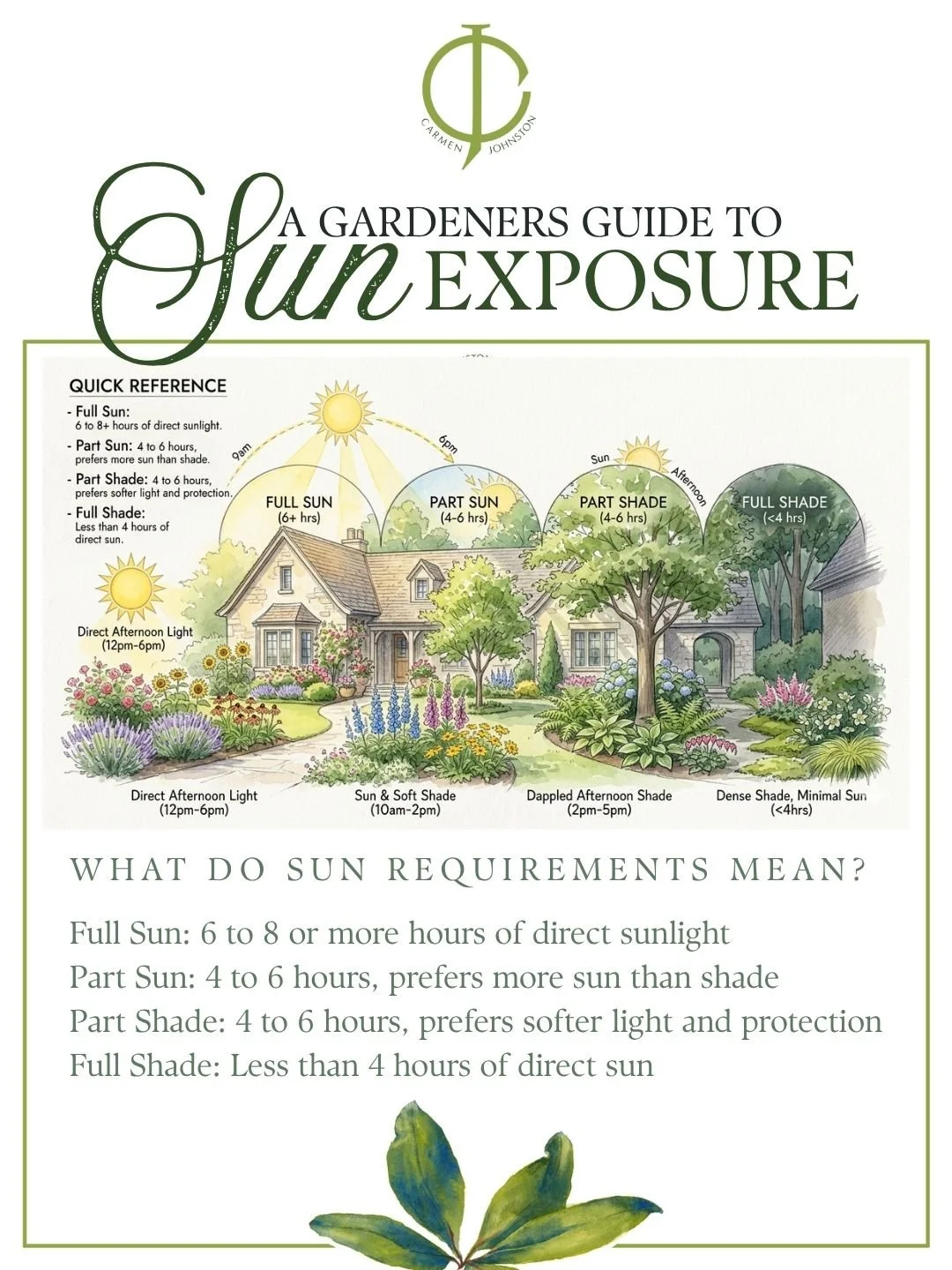
Quick Reference for Sun Requirements
Full Sun: 6 to 8 or more hours of direct sunlight
Part Sun: 4 to 6 hours, prefers more sun than shade
Part Shade: 4 to 6 hours, prefers softer light and protection
Full Shade: Less than 4 hours of direct sun
The Most Important Thing to Understand
It is not just how many hours of sun your garden gets. It is when that sun shows up and how strong it is.
In the South, morning sun is gentle, while afternoon sun is intense and drying.
That means a plant labeled full sun in another region may actually need part sun here. A plant labeled part shade often needs protection from that late day heat.
How to Read the Sun/Shade of Your Yard
Before planting anything, spend a little time observing your space. Watch your garden, take in where the sun is hitting as it travels overhead and down to the horizon each day. Observe how your house or large trees provides shade to your flower beds.
During late Spring and early Summer, check your sunlight in the morning, midday, and afternoon
Notice where shadows fall and how they move
Count how many hours a spot gets direct sun
You may discover that what you thought was a sunny spot is actually part sun, or that your shade area still gets strong morning light. Remember the sun is also much lower in the sky during the late fall and winter, so don’t use those times of year to make your determination. Spring and Summer (during growing season) are best.
Fun TIp: A Ring camera is a great way to watch the progress happen quickly!
Understanding light correctly is one of the biggest differences between plants that struggle and plants that truly thrive. Once you match the right plant to the right light, everything else becomes so much easier.
And truly, this is one of the most empowering things you can learn as a gardener. Once you see your yard through the lens of light, you will never plant the same way again.
Shop my Watering Essentials Here:
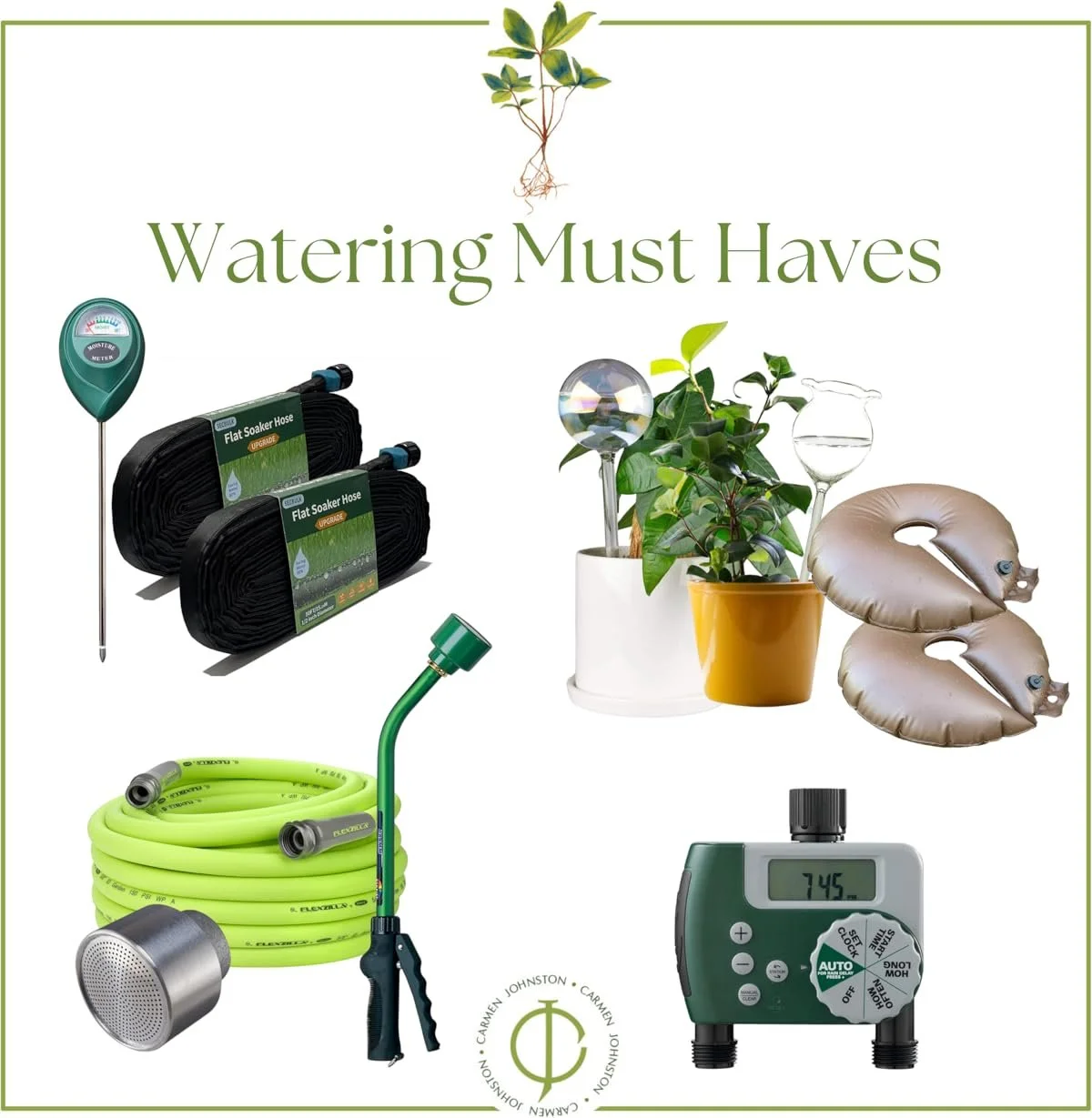

Shop my Amazon Favorites!
Shop my Amazon storefront for chic + practical finds to pretty up your home inside and out! Every pick is personally bought and tested by me—no false advertising, just fabulous finds you can trust!