
The Ultimate Hydrangea Guide
Hydrangeas are a perfectly pretty addition to any garden, and I know from all of your questions about them that y’all love hydrangeas as much as I do! I get a ton of questions regarding these gorgeous blooms, from planting to fertilizing and deadheading, you want to know the best ways to care for them to ensure they come back year after year. That is one of the main reasons we put together the Ultimate Hydrangea Guide for you. Make sure you’ve downloaded the PDF so it’s handy to reference year after year!
I wanted to break down some of the guide’s tidbits so you are confident about the best hydrangea choice for your zone! The five most common hydrangea types are: Bigleaf, Panicle, Smooth, Oakleaf, and Mountain. Below are a few of the questions I regularly get from y’all!

Hydrangea SOS: Your Quick Rescue Guide
Wondering why your hydrangea looks sad — or refuses to bloom? Don't panic. Most hydrangea problems trace back to a handful of fixable issues. Here's your cheat sheet.
Quick Troubleshooting
No blooms? → Wrong pruning time, or late frost zapped the buds
Wilting daily? → Too much sun or underwatering
Yellow leaves? → Often overwatering or poor drainage
Brown crispy edges? → Sunburn or thirst
Find out how to rescue your hydrangeas from common garden issues ahead…
No Blooms The most common culprit is pruning at the wrong time. If your hydrangea blooms on old wood (like most bigleaf varieties), pruning in fall or late winter removes next season's buds before they ever have a chance. Late frosts can do the same damage. Know your variety before you cut.
Wilting Daily A hydrangea that droops by afternoon is usually asking for more water or less sun. Morning sun with afternoon shade is the sweet spot for most varieties. If yours is in a hot, exposed location, even consistent watering may not be enough.
Yellow Leaves Yellowing is almost always a drainage issue. Hydrangeas like moisture, but their roots will not tolerate sitting in soggy soil. If your plant stays wet between waterings, check that the bed drains well and pull back on how often you water.
Brown, Crispy Edges Those scorched-looking edges are a sign your plant is stressed by heat or thirst. This is especially common in the South during summer. Water deeply at the base, mulch well to hold moisture, and make sure the plant has some protection from the hottest afternoon sun.
Hydrangeas are more forgiving than they look. A little observation and early intervention goes a long way! Once you know what to look for and take care of the issue; you will be surprised how quickly they bounce back.
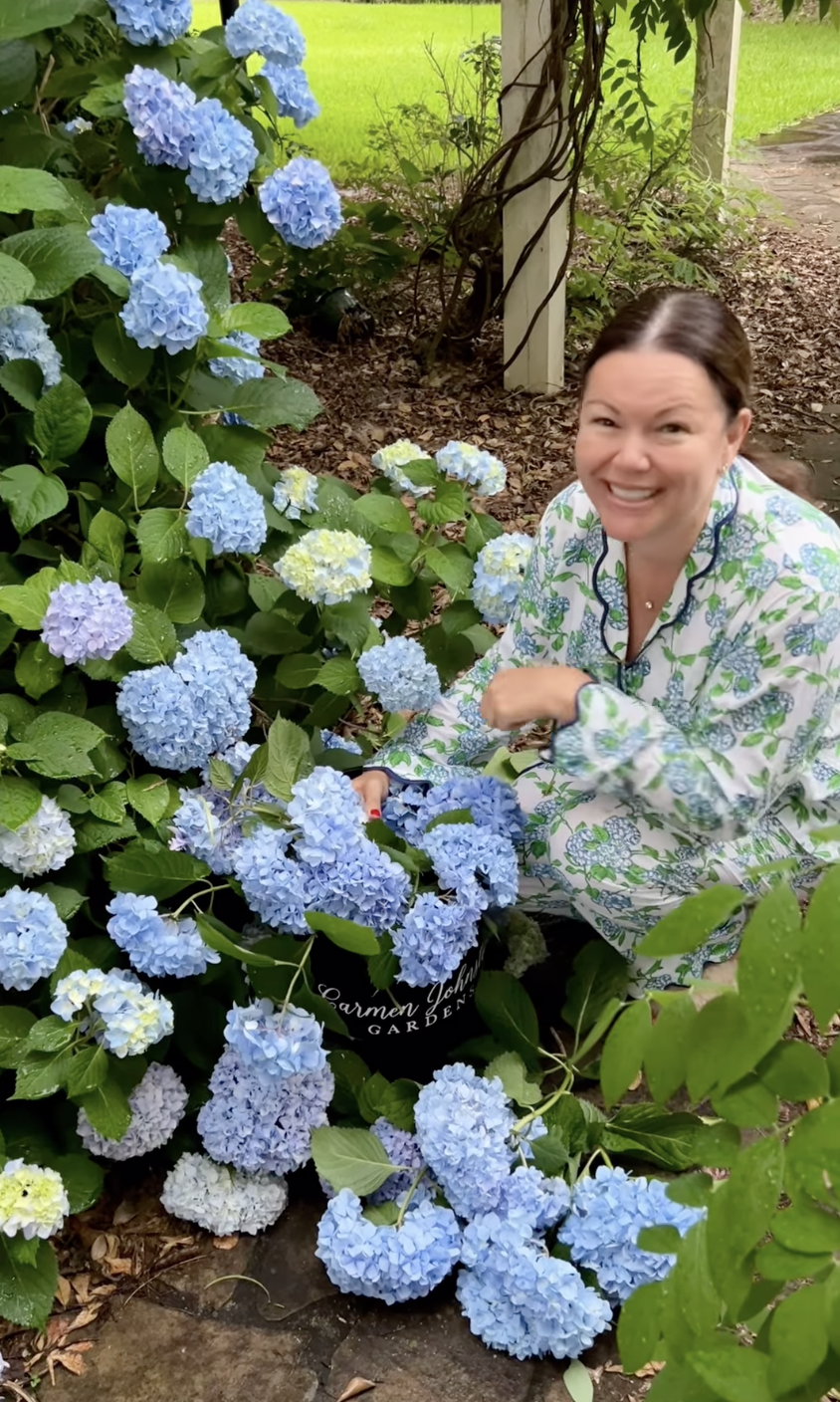
Tired of your Cut Hydrangea blooms not lasting very long?
Key Tips to Keep Your Hydrangeas from Wilting:
💙 Cut in the Morning:
Snip your blooms early in the day when the plant is fully hydrated—but if I need them at another time, I still go for it!
💙 Use Clean, Sharp Tools:
Always use a clean, sharp pair of cutters to make your cut. Then, grab a veggie peeler and lightly scrape all four sides of the stem—this helps the stem absorb more water.
💙 Dip in Alum Powder:
Dip the ends of the stems in alum powder (you’ll find it in the spice aisle at the grocery store). It prevents the stems from sealing off and boosts water uptake. Alum is both acidic and astringent, keeping sap from clogging the stem so water can flow freely—keeping your blooms fuller, longer!
💙 Submerge the Blooms:
If wilting happens, don’t panic! Soak the entire bloom in water for several hours (I sometimes leave them overnight), and they’ll rehydrate beautifully.
And that’s how to keep your hydrangeas from wilting so quickly! 💙


Shop my Hydrangea Favorites
Shop for my favorite items (and plants) to grow big, beautiful hydrangeas all summer long!
Fertilizer for Hydrangeas
Garden Lime (turns blooms pink)
HOW TO GROW HYDRANGEAS FAQS
When is the best time to plant hydrangeas?
Fall! Planting them during early fall gives hydrangeas enough time to establish a healthy root system. It is super important to maintain an adequate watering schedule with any new plantings. Here are a couple of my favorite tools for watering hydrangeas well!
How to Propagate Hydrangeas?
Take a 4–6 inch cutting from a healthy, non-flowering stem. Remove the lower leaves, dip the cut end in rooting hormone (optional but helpful), and plant it in moist potting mix. Cover with a plastic bag or humidity dome to keep it humid, and place it in bright, indirect light. Keep the soil moist, and in a few weeks, roots should form!
Once your cutting has rooted (usually after 3–4 weeks), here’s what to do next:
Check for roots:
Give the cutting a gentle tug—if you feel resistance, roots have formed!Remove the cover:
Gradually remove the plastic bag or humidity dome over a few days to help the plant adjust to normal humidity.Transplant:
Once it’s rooted and growing new leaves, transplant it into a slightly larger pot with fresh potting soil, or directly into your garden if the weather’s right.Acclimate outdoors:
If planting outside, harden it off by placing it outdoors in shade for a few hours a day, increasing time gradually over a week.Care as usual:
Water regularly and give it some TLC—your baby hydrangea is on its way to becoming a big, beautiful bloomer!


What kind of soil do hydrangeas like?
Hydrangeas need well-drained soil that is plentiful in organic matter. Without good drainage, the soil can become waterlogged and potentially result in root diseases. To increase organic matter, simply mix in compost before planting! This rose food is fabulous on hydrangeas!

Click to purchase!
Can I control the color of my hydrangea blooms?
One thing I think is so unique about hydrangeas is their ability to change colors—it’s so fun! The primary factor influencing the hues of blooms is soil pH. The pH level affects the soil’s aluminum ions, which in turn affects the color pigments produced by hydrangea plants. In acidic soil (pH below 7), hydrangeas typically produce blue or purple flowers. Aluminum ions are more readily available in acidic soil, so the plant absorbs the ions, forming anthocyanins pigments. This is what gives the flowers their blue or purple color. In alkaline soil (pH above 7), hydrangeas typically produce pink or reddish flowers. Aluminum ions are not as available in alkaline soil, so the plant absorbs more of the element calcium.
This leads to the production of pigments that create pink or red flowers. To change the color of your hydrangeas, you can use specific chemicals to alter the soil pH. Aluminum sulfate is a super-common chemical used to turn hydrangea blooms blue! It acidifies the soil, which lowers its pH and increases the availability of aluminum ions, lending the flowers a classic blue hue. Add to the soil around the base of the plant. To encourage pink or red hydrangeas, sprinkle agricultural lime, also known as garden lime or calcium carbonate, on the soil to raise the pH and make it more alkaline. This reduces the availability of aluminum ions and produces the pretty pinkish-red color. Click here to shop all my favorite hydrangea products!

